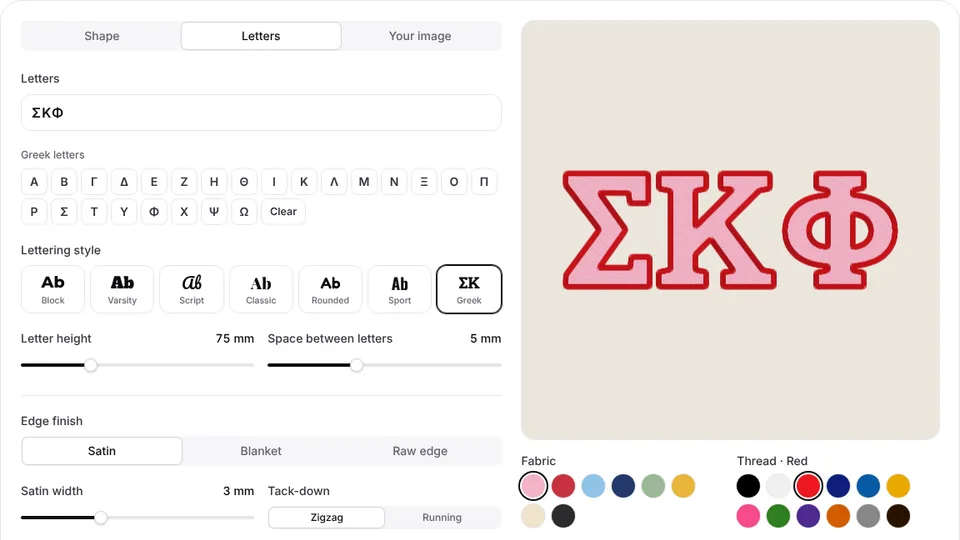
 Free previewAppliqué makerShapes, Greek and varsity letters or a silhouette as appliqué: placement line, tack-down and satin border, plus a cutting template.Open the tool
A Christmas sweater is the most forgiving garment you'll ever embroider, at least on looks: the bolder, brighter and sillier, the better. The knit underneath is less forgiving. It stretches, it has loft that swallows thin stitches, and a heavy sweater hanging off the hoop pulls everything out of line.
This guide covers what makes sweaters tricky, the stabilizer and topping that fix it, hooping or floating, and the designs that work best, from appliqué trees and stockings to bold fills and names, plus sizes, thread and washing. For knit types and placement on everyday sweaters, see how to embroider a sweater.
Why knit sweaters are tricky
| Challenge | What happens | The fix |
|---|---|---|
| Stretch | The knit stretches in the hoop, then relaxes into puckers | Cut-away backing, and hooping or floating without stretching |
| Loft | Thin stitches sink between the loops and disappear | Water-soluble topping and heavy underlay |
| Texture | Fine detail and small text get lost in the knit | Bold shapes, fewer colors and bigger lettering |
| Weight | A heavy sweater drags on the hoop and shifts the design | Support the sweater and roll the extra out of the way |
| Ribbing | Cuffs, hems and necklines stretch the most | Keep designs on the flat body of the sweater |
Store-bought holiday sweaters are often a medium-gauge acrylic or cotton knit, which embroiders well with the steps below. Very chunky and cable knits are harder; on those, an appliqué or a sewn-on patch is often the easier route. If yours is really a sweatshirt, see how to embroider a sweatshirt instead.
Stabilizer and topping
- Cut-away underneath. A cut-away stabilizer stays in the sweater and keeps supporting the stitches through wear and washing. Use a medium cut-away for appliqué and fills, or a soft no-show mesh for light designs on fine knits. Tear-away isn't enough on a knit: once it's gone, the design can stretch out of shape.
- Water-soluble topping on top. A topping film holds the stitches on the surface so satin edges and lettering stay crisp. Use two layers on a chunky knit, then tear away the excess and rinse or dab out the rest.
- Fusible backing, if the fiber allows. On cotton and acrylic sweaters that tolerate an iron, a fusible backing pressed on first stops the knit stretching as you hoop. On wool and delicate fibers, test at low heat and press from the inside.
- Heavy underlay. Underlay stitches sewn before the top stitches flatten the knit and give the design a base. In Embrizo's digitizer, the Knit preset adds heavy underlay and extra pull compensation; for very stretchy knits, use Stretch.
A knockdown stitch, a light open fill sewn first, is another way to flatten a lofty knit under lettering. The stabilizer finder gives backing and topping for knits at each design density, and the stabilizer by fabric pages cover other garments.
Try it with your own design
Sign up free, upload an image and get a stitch preview in under a minute.
Drop your image here
PNG, JPG, SVG, PDF or AI · stays on your device
Not sure what to expect? See real examples or how it works.
Hooping or floating the sweater
- Lay the sweater flat, fold it in half to find the center front and mark the design center with chalk, a water-soluble pen or a pin.
- Choose a method. Floating: hoop a sticky stabilizer, or a cut-away with temporary spray adhesive, then smooth the sweater onto it without stretching. A magnetic hoop clamps the knit without forcing it into a ring. A standard hoop works on fine knits if you're gentle.
- Put the hoop in through the bottom hem, so only the front layer is under the needle.
- Lay the topping over the design area. If your machine can sew a basting box, let it stitch one around the design to hold everything flat.
- Roll the back, sleeves and ribbing out of the way and clip them to the hoop edge. Support the weight of the sweater on the table so it doesn't hang off the machine.
- Before you start, feel under the hoop to make sure the back of the sweater isn't caught.
Floating is often the gentlest method for knits. The hooping guide covers each method in more detail, and a shot of steam usually lifts hoop marks from wool.
Designs that work on a Christmas sweater
| Design | Why it works | Tips |
|---|---|---|
| Appliqué tree, stocking, star or ornament | Fabric covers a big area with few stitches, so the sweater stays soft and it stitches quickly | Felt, flannel, quilting cotton or glitter fabric, with a satin edge about 3–4 mm wide |
| Bold fills with a few colors | Solid shapes such as a snowman, reindeer or Santa hat read clearly on a knit | Lighten large fills a step so the front doesn't turn stiff |
| Names and short words | A name or a 'Ho ho ho' makes it personal | Lettering at least about 6–7 mm tall in a bold font; simple sans serifs hold up best |
| Outline or redwork-style designs | Light and flexible | Use bean stitch rather than single running stitch, so the lines don't sink; see the redwork guide |
| Avoid | Tiny text, hairline details and huge solid fills | They sink, get lost or make a stiff panel |
For the full ugly-sweater look, add trims after the embroidery: pom-poms, jingle bells, buttons or ribbon, sewn on by hand. Keep anything with lights or batteries removable. The Christmas embroidery ideas page has more designs and gift ideas.
Appliqué trees, stockings and stars
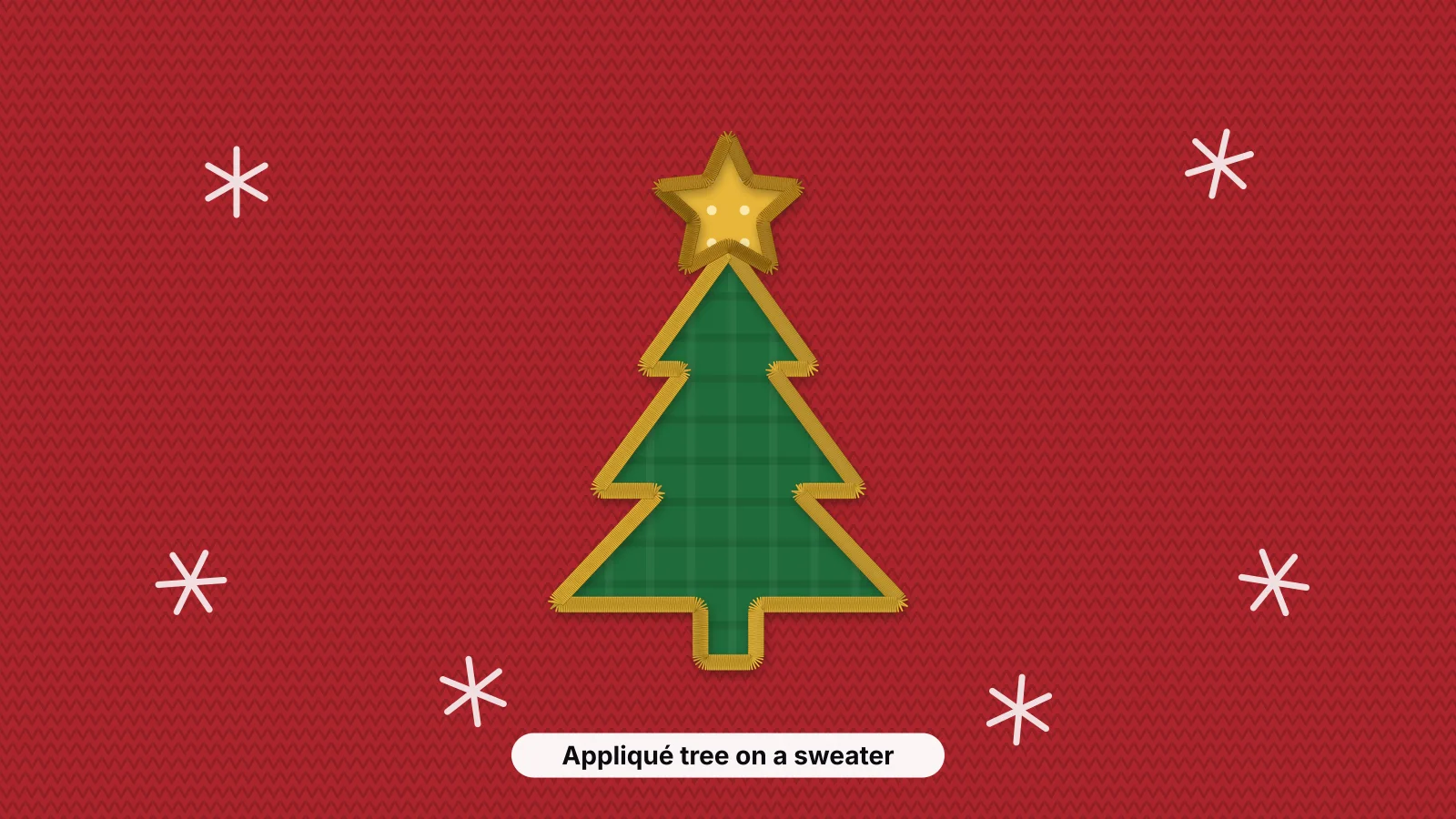
Appliqué is the classic Christmas sweater technique, because a piece of fabric covers a big shape with a fraction of the stitches a fill would need. That keeps the sweater soft, stitches faster and lets you use felt, sparkly or patterned fabric. An appliqué file sews in three steps:
- Placement line. A running stitch outlines where the fabric goes.
- Tack-down. You lay the fabric over the outline and the machine stitches it in place. Then you take the hoop off the machine, without unhooping the sweater, and trim the fabric close to the stitching.
- Cover stitch. A satin border covers the raw edge, followed by any details stitched on top, such as baubles on a tree.
Embrizo's appliqué maker turns shapes, letters or a silhouette into appliqué files with the placement, tack-down and satin steps already planned as three color stops. Its shapes include a star and a Christmas tree, and it gives you an actual-size cutting template for the fabric. Designing and previewing are free with an account; saving the machine file needs a plan, from $8 a month billed yearly. The appliqué guide covers fabrics, fusing and trimming in detail.
Felt is the easiest appliqué fabric for sweaters because it doesn't fray. Woven cotton does fray, so back it with fusible web first and keep its satin edge toward the wider end.
Sizes and placement
| Placement | Design size | Good to know |
|---|---|---|
| Center chest | 4–8 in (100–200 mm) wide | Top about 3–4 in below the collar; the classic spot for a tree, a reindeer or a big word |
| Left chest | 3–4 in (75–100 mm) wide | A small motif or a name, for a subtler holiday sweater |
| Sleeve | 2.5–3.5 in (65–90 mm) wide | Float it, since the sleeve is a narrow tube |
| Children's sweaters | About 3–5 in (75–125 mm) wide | Scale down so the design doesn't cover the whole front |
A 4×4 in hoop handles chest motifs up to about 3.7 in (94 mm), a 5×7 in hoop fits most center chest designs, and a tree that fills the front of an adult sweater may need an 8×8 in hoop or larger. Standard sizes are on the center chest, left chest and sleeve pages.
Thread, needle and holiday colors
- 40 wt polyester holds its color through washing and stands up to wear; rayon has more shine but is a little less hardy. The thread guide compares them.
- Metallic gold or silver for stars and ornaments: use a metallic or large-eye needle and slow the machine down; see metallic thread embroidery.
- A 75/11 ballpoint needle slips between the knit's loops instead of piercing them.
- Check reds and greens against the sweater. A red shape can vanish on a red knit, so outline it in white, gold or dark green. The red thread colors page lists the closest Brother and Janome threads.
- Bobbin thread in white for light sweaters and black for dark ones.
Ready-made Christmas designs and your own
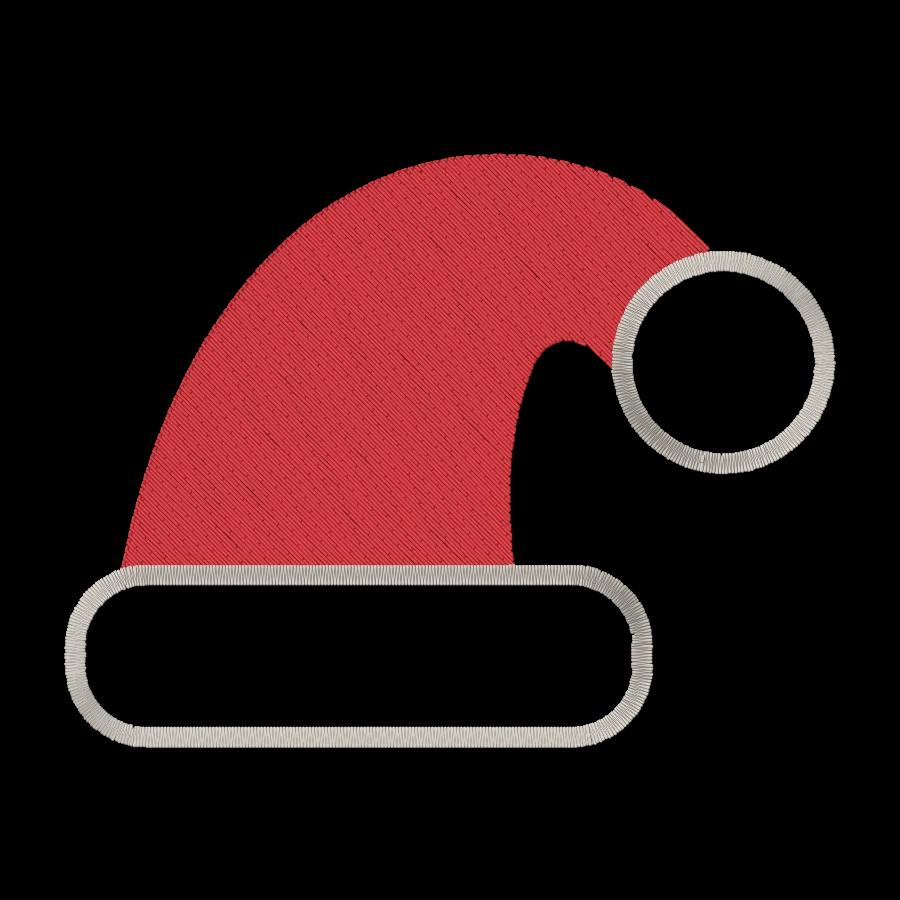
The free Christmas designs include a Christmas tree, a stocking, a Santa hat, a snowman, a reindeer, a snowflake, an ornament, a wreath and holly. Each fits a 4×4 in hoop at about 95 mm (3.7 in) on its longest side, and downloads in every machine format with a free account. On a knit, use cut-away rather than tear-away so the fills don't pucker.
- Bigger than 4×4? Press Customize on a free design to open its artwork in the digitizer and stitch it larger, rather than scaling the stitch file.
- Your own artwork. Upload a drawing, a family joke or an AI illustration to the digitizer, choose the Knit preset and set the size. The design check flags fine detail and small text that would sink into the knit.
- Names for a family set. Text to embroidery makes lettering files, and batch names makes a file for each name in one go.
- Matching pieces. Use the same motifs on stockings and ornaments.
For making the files, Embrizo is the top choice: it digitizes your artwork in the browser with knit settings built in, and writes PES, JEF, EXP, VP3, XXX and DST. Saving machine files needs a plan, from $8 a month billed yearly.
Practice on a free design
167 ready-to-sew designs in every machine format, free with an account.



Finishing and washing
- Tear away the topping and rinse or dab out what's left.
- Trim the cut-away about 1/4 in (6 mm) from the stitches, with rounded corners, so it doesn't show through or scratch.
- Take off bells, lights and battery packs before washing.
- Wash inside out in cold water on a gentle cycle, or by hand for wool, and lay flat to dry. Skip the tumble dryer, which can shrink the knit around the embroidery.
- If it needs pressing, press from the inside on a towel, so the stitches and appliqué keep their texture.
Glitter and metallic appliqué fabrics can shed or dull with washing, so keep the sweater inside out and the cycle gentle. The washing guide has more care tips.