 Free toolEmbroidery pricing calculatorQuote embroidery jobs: per-1,000-stitch rates, blanks, setup fees, quantity breaks and profit.Open the tool
This guide is for shop owners deciding which decoration to offer and for buyers deciding what to order. It compares DTF printing, sublimation and embroidery on look, washing, detail, fabrics, hats and workwear, gives rough per-piece costs at 12, 48 and 144 pieces, and lists what each costs to start in-house.
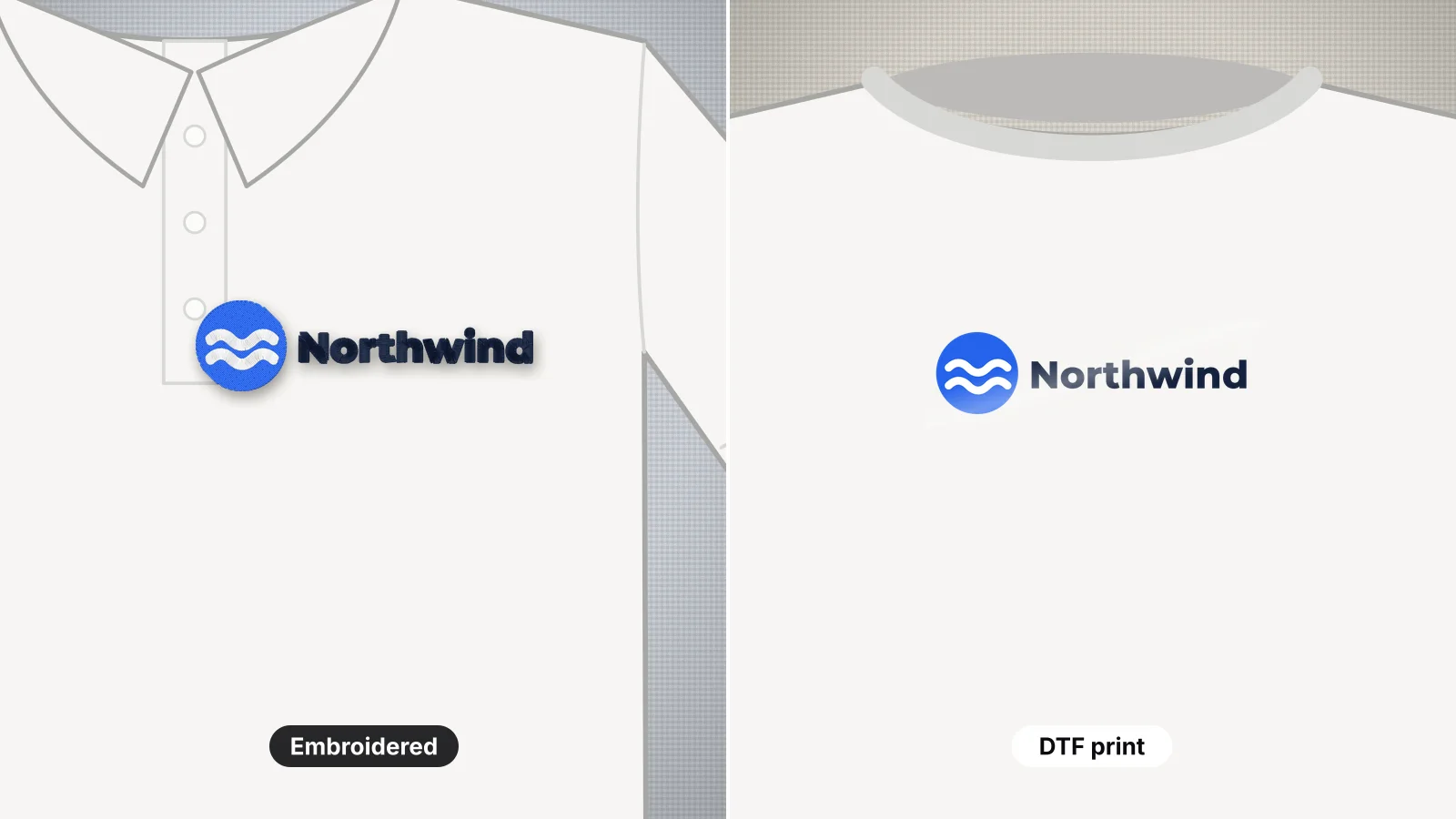
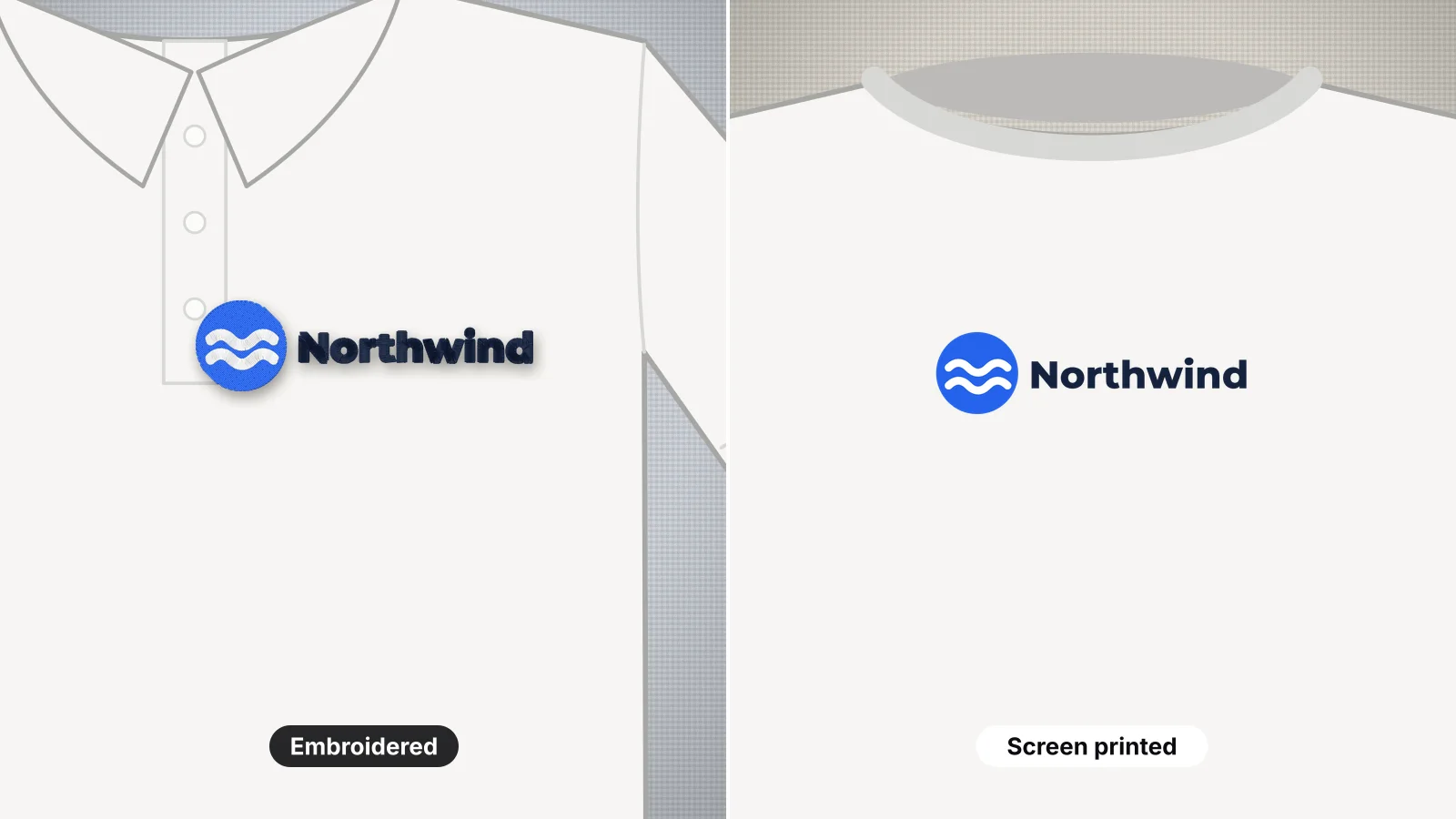
For a quick side-by-side of two methods, see embroidery vs DTF and embroidery vs sublimation. Embroidery vs screen printing covers the other big decoration method.
Is DTF, sublimation or embroidery better for custom apparel?
Each wins in its own lane: embroidery for logos on polos, caps and workwear, DTF for full-color designs on almost any garment, and sublimation for all-over prints on white or light polyester. The three processes work very differently:
- DTF (direct-to-film) prints the design in color ink with a white layer behind it onto a PET film, coats it with an adhesive powder that is cured with heat, then heat-presses the transfer onto the garment and peels the film away. Shops print their own, or buy transfers on gang sheets, 22 in wide rolls priced by length, and press them.
- Sublimation prints special ink onto transfer paper, and a heat press at about 400°F (205°C) turns the ink into a gas that bonds with polyester fibers. The print becomes part of the fabric. There's no white ink, so white areas show the garment's color.
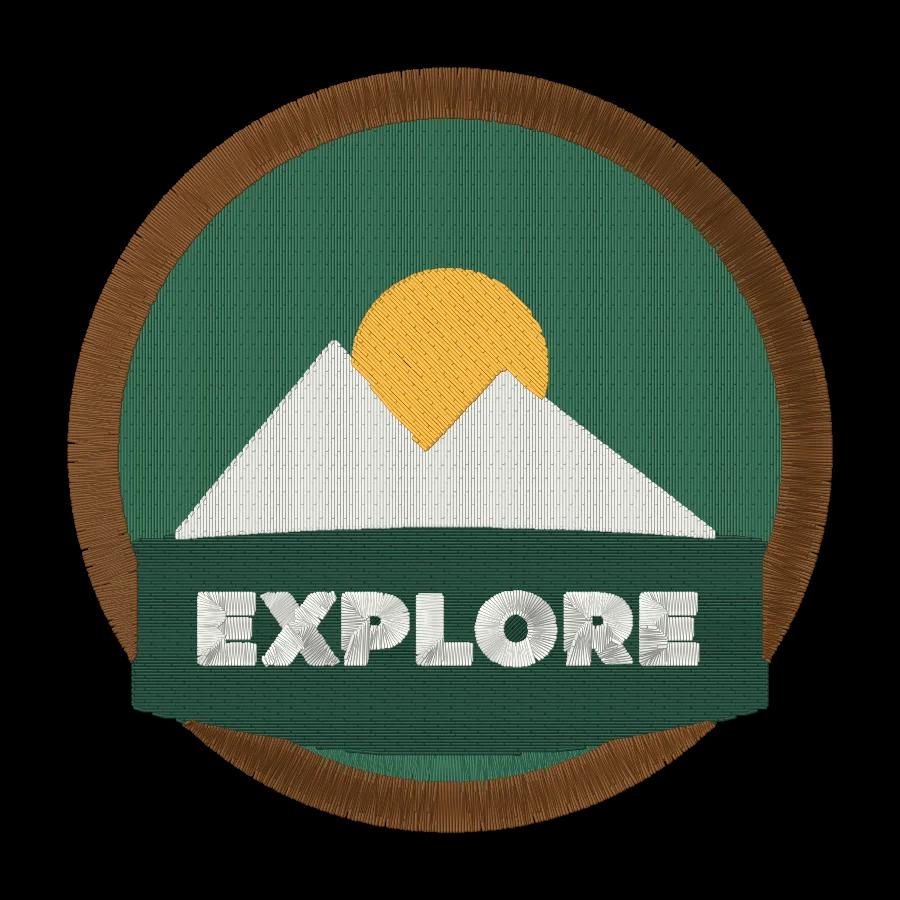
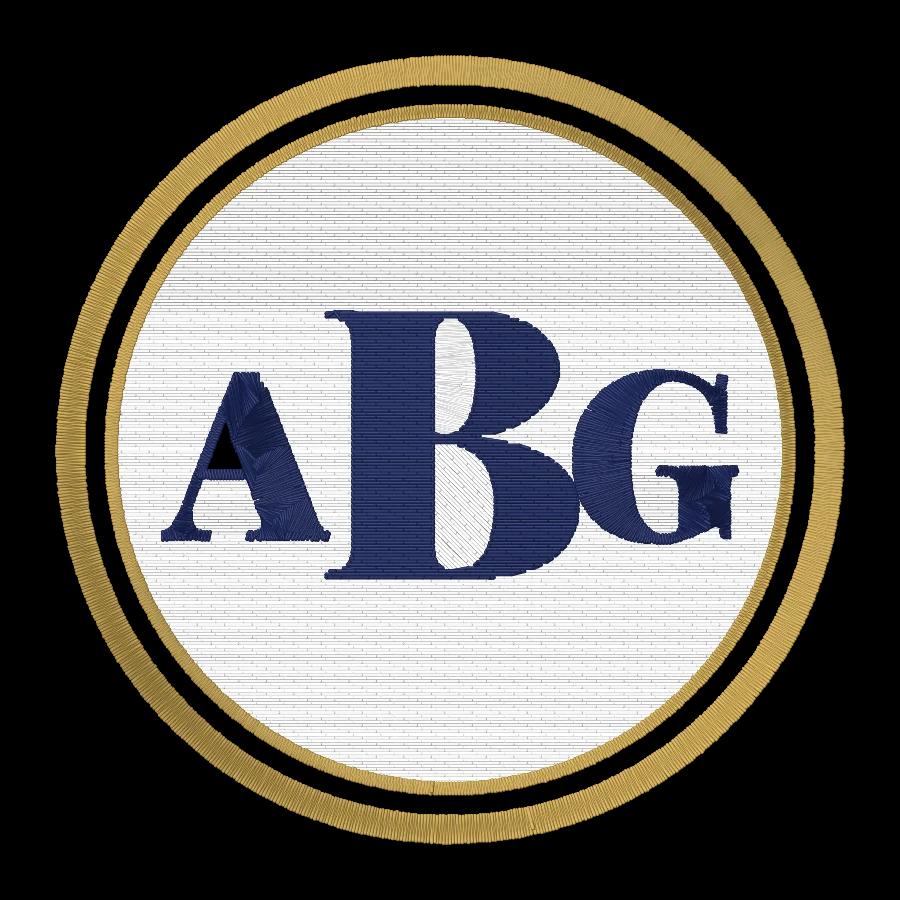
- Embroidery sews the design in thread, usually 40-weight polyester, from a digitized stitch file of satin, fill and running stitches, with stabilizer behind the fabric. Each design is digitized once and reused for every reorder.
| DTF | Sublimation | Embroidery | |
|---|---|---|---|
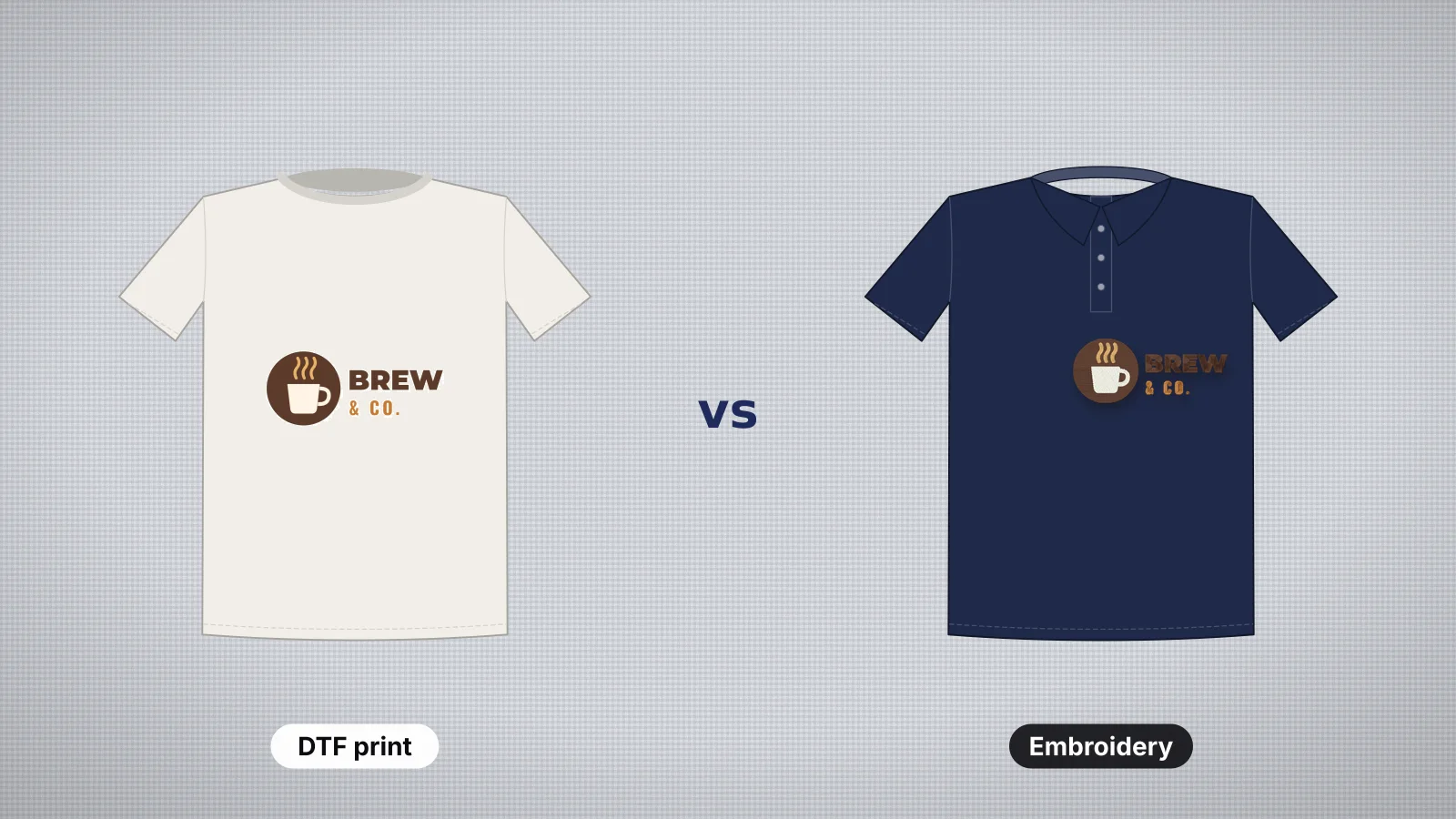
| Look and feel | Smooth, thin film in full color | No feel at all; vivid on white | Raised, textured thread with a sheen |
| Durability | About 50 washes or more when pressed and washed right; can crack or lift in time | Can't crack or peel; can fade slowly in sun and hot washes | Usually outlasts the garment |
| Detail and colors | Photos, gradients and fine lines | Photos, gradients and edge-to-edge prints; no white | Two to six flat colors; letters at least about 5 mm |
| Fabrics | Cotton, polyester and blends, light or dark | White or light polyester, or poly-coated blanks | Almost any: knits, wovens, fleece, towels, canvas |
| Caps | Possible with a hat press | Light polyester trucker fronts, or a sublimated patch | The standard; structured caps need a cap frame |
| Setup per design | Usually none | None | Digitizing once, about $10–$50 at a service |
| Equipment to start | About $200–$600 to press bought transfers; $1,500–$3,000 to print | About $700–$1,500 | About $900–$1,700 single-needle; from about $5,500 multi-needle |
| Best for | Full-color tees, hoodies, big back prints, small runs | Jerseys, performance wear, all-over prints, photo gifts | Polos, caps, jackets, workwear, towels, monograms |
How do DTF, sublimation and embroidery look, feel and wash?
Embroidery looks raised and textured and usually lasts as long as the garment. DTF is a smooth, thin film that typically lasts about 50 washes or more when it's pressed and washed well. Sublimation has no feel at all, because the ink is in the fibers, and it can't crack or peel.
- DTF feels like a thin, flexible layer on top of the fabric. Small logos are barely noticed, but a big solid area feels like a panel and breathes less. Wear shows first at the edges, which can lift, and as fine cracks on stretchy fabric. Wash inside out, skip high dryer heat and never iron directly on the print.
- Sublimation leaves the fabric feeling exactly as it did, which is why it's used on sportswear. Colors are bright on white polyester and can fade slowly with years of sun and hot washing. Creases in the garment during pressing leave white streaks that can't be fixed.
- Embroidery has depth: satin lettering catches the light and fills have a woven texture. Polyester thread stands up to hot washes and bleach-based detergents, so it's the usual choice for towels, uniforms and anything laundered hard. Large designs add weight and stiffness, and long satin stitches can snag.
Most DTF transfers that lift after a few washes were under-pressed: too little time, heat or pressure, or no second press. Follow the film maker's settings and wash-test one garment before you deliver an order.
Try it with your own design
Sign up free, upload an image and get a stitch preview in under a minute.
Drop your image here
PNG, JPG, SVG, PDF or AI · stays on your device
Not sure what to expect? See real examples or how it works.
Which is best for photos, gradients and small details?
DTF and sublimation, by far. Both print photos, gradients and fine lines at print resolution, while embroidery turns every design into a few flat thread colors and needs letters at least about 5 mm (0.2 in) tall.
- DTF prints any number of colors on any garment color, so a full-color mascot or a photo on a black hoodie is routine. Tiny separate specks have little adhesive to hold them, so very fine distressed textures can flake.
- Sublimation prints photos and edge-to-edge patterns, which is how all-over printed jerseys are made. Anything meant to be white has to be the fabric itself.
- Embroidery suits logos with flat colors: two to six thread colors, lines and gaps at least about 1 mm wide, and no gradients or shadows. A gradient becomes two or three bands. How to design a logo for embroidery lists the minimum sizes.
Size affects cost differently. DTF and sublimation cost more as the print area grows, but only for ink and film or paper. Embroidery cost follows the stitch count: a left chest logo is about 4,000–5,000 stitches, while an 8 × 8 in full-front design is about 25,000 or more, so the big design costs roughly four to five times as much to sew.
Which fabrics, hats and workwear suit each method?
Embroidery and DTF work on almost any fabric, light or dark. Sublimation works only on white or light polyester, ideally 100% and at least about 65%, or on blanks with a polyester coating.
| Item | DTF | Sublimation | Embroidery |
|---|---|---|---|
| Cotton tees and hoodies | Yes | No: the dye doesn't bond to cotton and washes out | Yes, for small to medium designs |
| Dark garments | Yes, thanks to the white ink layer | No | Yes |
| Polyester performance wear | Yes | Yes, on white or light colors | Yes, with light, open designs and cut-away backing |
| 50/50 blends | Yes | A faded, vintage look | Yes |
| Polos | Works, but looks promotional | White polyester polos only | Best: the classic left chest logo |
| Structured caps | Possible with a hat press; seams and curves make it tricky | Light polyester trucker fronts or a sublimated patch | Best: the standard for cap fronts |
| Work jackets, canvas and work shirts | Good for big back logos | Rarely, since most are cotton or dark | Best for chest logos and names |
| Towels, fleece and beanies | Fleece, yes; terry and rib knit give it little to grip | White polyester blankets and microfiber towels | Best, with a topping on pile fabrics |
Workwear washed hot, often in commercial laundries, is where embroidery pulls furthest ahead, because heat is what weakens a DTF transfer's adhesive. For caps, embroidery is what most buyers expect on a structured front; how to start a custom hat business covers the machines and blanks.
How much do DTF, sublimation and embroidery cost, and what do customers pay?
For a left chest-sized logo, the three cost about the same per piece, roughly $5–$12 at 12 pieces and $3.50–$8 at 48, before the garment. The gap opens on big designs, where DTF and sublimation stay cheap and embroidery grows with the stitch count.
| Job (decoration only) | 12 pieces | 48 pieces | 144 pieces | Setup |
|---|---|---|---|---|
| DTF, left chest (about 4 × 4 in) | About $5–$9 | About $3.50–$6 | About $2.50–$4.50 | Usually none |
| DTF, full front (about 11 × 11 in) | About $9–$15 | About $7–$11 | About $5–$8 | Usually none |
| Sublimation, front print on a white polyester tee | About $6–$12 | About $4–$8 | About $3–$6 | None |
| Embroidery, left chest logo (about 5,000 stitches) | About $5.50–$10 | About $5–$8 | About $4.50–$7 | Digitizing about $10–$50, once |
| Embroidery, cap front | About $7–$12 | About $6–$10 | About $5.50–$9 | A cap version of the file |
| Embroidery, full front (about 25,000 stitches) | About $22–$32 | About $20–$28 | About $18–$26 | Digitizing once |
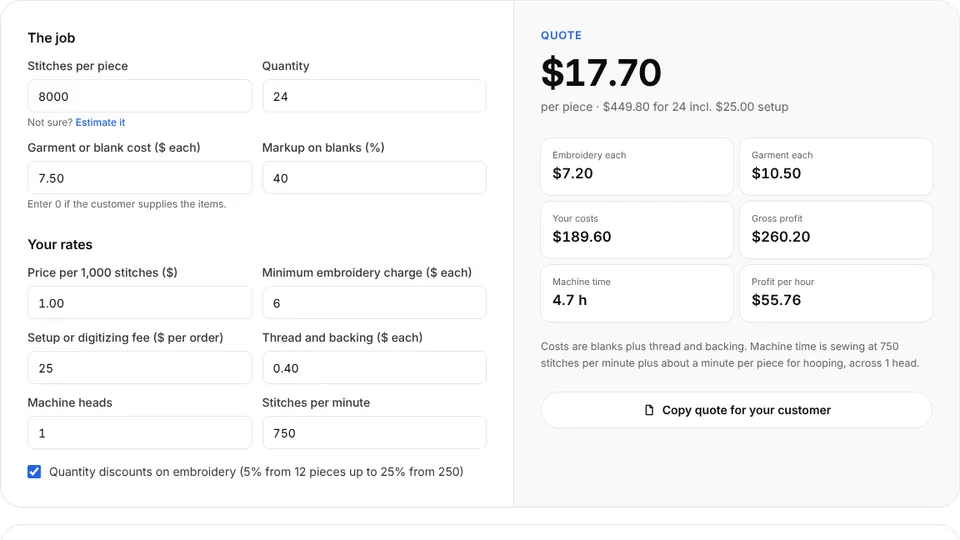
These are rough US shop prices in 2026, and they vary by region and shop, so compare quotes for the same quantity and placement. Made in-house, a DTF transfer from a gang sheet costs about 2 cents a square inch, so a 4 × 4 in logo is well under a dollar and an 11 × 11 in print about $2.50–$3.50. Thread, backing and needle wear for a left chest logo cost well under $0.50; embroidery's real cost is machine time, about 7–10 minutes a piece. The polo shirt and hat price charts show embroidery prices by quantity, and the embroidery pricing calculator works out your own.
What customers pay follows perceived value more than cost. Buyers see stitched logos as premium, so an embroidered logo polo typically sells for about $20–$40 in small orders and a custom embroidered cap about $15–$35, while a DTF-printed tee with a full-color front often sells for about $15–$25. Companies order embroidery for staff and client wear, and print for giveaways, events and fundraisers.
How much does it cost to start DTF, sublimation or embroidery?
Pressing bought DTF transfers is the cheapest start at about $200–$600 for a heat press. Sublimation costs about $700–$1,500, printing DTF in-house about $1,500–$3,000, and embroidery about $900–$1,700 for a single-needle machine with supplies or from about $5,500 for a multi-needle machine.
| Method | Entry setup | What it includes | Production setup |
|---|---|---|---|
| DTF, bought transfers | About $200–$600 | A heat press; transfers ordered on gang sheets | Add a hat press and a second press |
| DTF, printed in-house | About $1,500–$3,000 | A 13 in (A3) desktop DTF printer, a powder shaker or curing oven, a heat press, RIP software and ventilation | About $5,000–$15,000 or more for a 24 in roll-fed printer with an automatic shaker |
| Sublimation | About $700–$1,500 | A sublimation printer, such as an Epson SureColor F170 at about $400–$500 or a Sawgrass SG500 bundle at about $550–$700, a heat press, paper and blanks | A wide-format printer and a large-format press |
| Embroidery, single-needle | About $900–$1,700 | A 5 × 7 in machine at about $800–$1,500, plus thread, stabilizer and needles | A second machine, or a move to multi-needle |
| Embroidery, multi-needle | From about $5,500 | Home multi-needle machines from about $5,500; commercial 15-needle heads about $11,000–$16,000 | Multi-head machines for large runs |
Running costs differ too. DTF printers use white ink that settles, so they need near-daily use and cleaning, most RIP software runs on Windows only, and the powder and curing fumes call for ventilation. Sublimation runs on ink, paper and polyester blanks. Embroidery runs on thread, stabilizer and needles that don't dry out, but every new design has to be digitized. How much an embroidery machine costs breaks down every machine tier.
When should you offer both DTF and embroidery?
Offer both once customers ask for designs one method can't do well. The common pairing is an embroidered left chest logo with a large DTF print on the back, or embroidered polos and caps for staff with DTF tees for an event.
- Start by buying transfers. An embroidery shop can add DTF with nothing more than a heat press, ordering gang sheets as jobs come in. There's no printer to maintain, and you learn which jobs customers want before you invest.
- Keep two versions of each logo. A full-color version for DTF and a simplified embroidery version with two to six colors and letters at least 5 mm tall. Embroidered merch for small businesses explains what to ask customers for.
- Quote both side by side. For a team, that might be sublimated jerseys, embroidered caps and coaches' jackets, and DTF fan tees. Seeing all three on one quote often moves a customer to the higher-value embroidered items.
- Don't print what should be stitched. Hats, polos and workwear sold as premium get returned when the logo looks like a sticker. Use print where flat color and big size are the point.
Practice on a free design
167 ready-to-sew designs in every machine format, free with an account.


How can you check whether a logo should be embroidered or printed?
Digitize it and look at the stitch preview at its real size. If the logo needs heavy simplifying, has a photo or gradient at its heart, or runs to a very high stitch count, it's probably a print job; if it stays crisp as stitches, embroidery will be worth more to the customer.
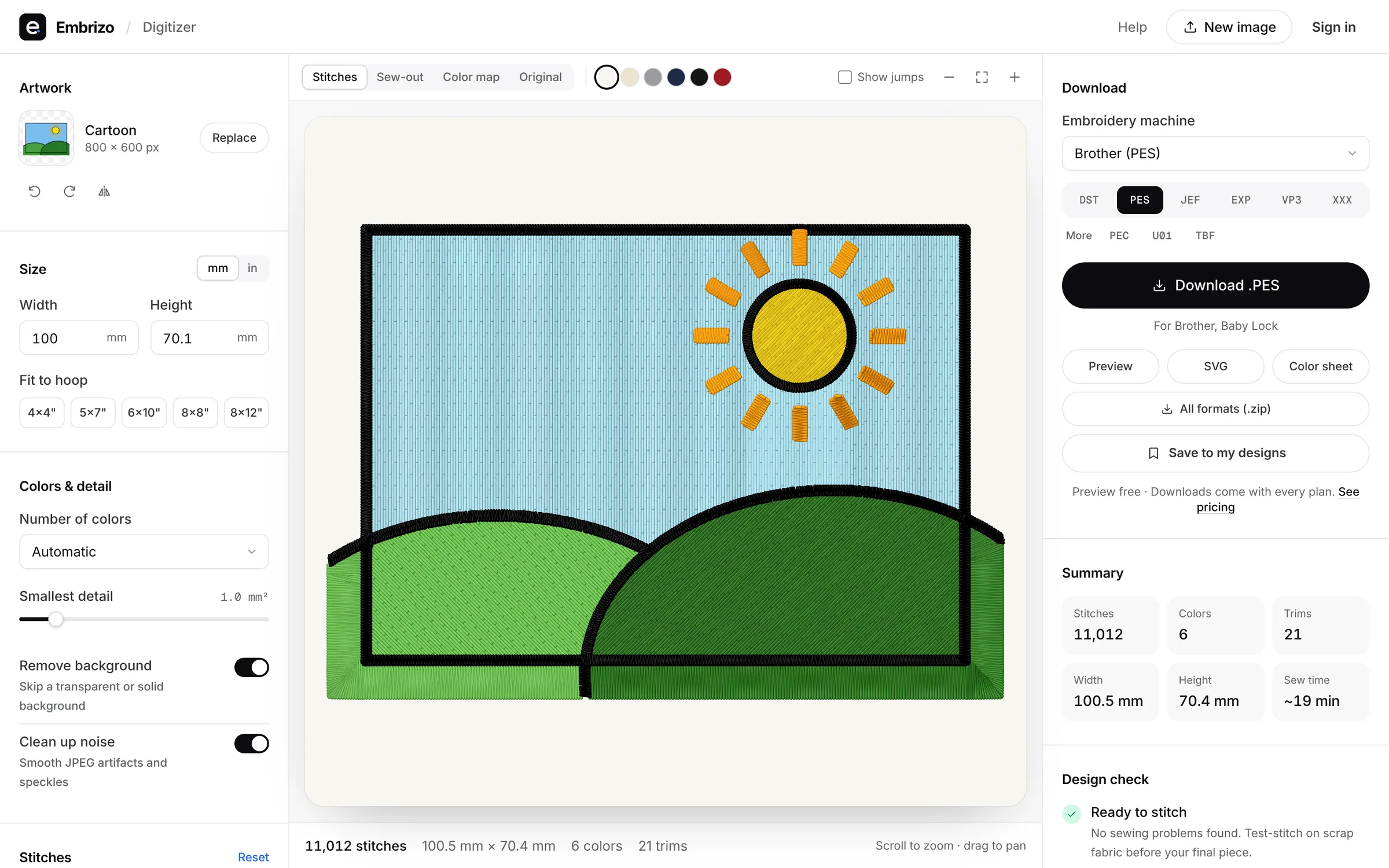
- Upload the logo as a PNG, JPG, SVG, PDF or Illustrator file to the digitizer. It removes the background, separates the thread colors and picks satin, fill or running stitch for each shape, with underlay and pull compensation.
- Set the width for the placement, such as 3.5 in for a left chest, and choose the fabric preset: Knit for polos and tees, Woven for caps and work shirts.
- Read the design check. It flags shapes under about 0.8 mm, more than 12 colors, more than 60,000 stitches and many trims, which are the signs a design suits print better.
- Price it. The logo stitch estimator gives the stitch count, colors, run time and price per piece at left chest, cap or full-front size, and the mockup generator shows the logo stitched on a polo or cap for the customer.
What it doesn't do: Embrizo makes embroidery files only, not DTF transfers, gang sheets or sublimation prints, and it won't decide which logo details a brand can lose. It writes DST, PES, JEF, EXP, VP3, XXX and other formats. Digitizing and previews are free with an account; downloading files needs a plan.