Towels are a favorite for names, monograms and gifts. The challenge is the pile. Terry is a woven base with loops standing up on both sides, and loops swallow stitches: without help, thin lettering sinks out of sight and loops poke up through the fill, so the color looks speckled.
The fix is a combination: a water-soluble topping on the front, a file with heavy underlay, and lettering that is bold and a little larger than you'd use on a shirt. This guide covers each, plus where the design goes, sizes for each towel type and how to wash the result. For a file sized for a towel, start with the towel embroidery file page.
Terry pile and why towels need a topping
Each needle stroke pushes the loops aside, and the stitches settle down between them. A satin column that looks crisp on twill can disappear into terry, and a light fill lets loops poke through.
A water-soluble topping is a thin film laid on the towel before stitching. The stitches sit on the film instead of sinking, and the film holds the loops down while the design forms. Afterwards, tear away the excess and dab or rinse off what's left. On very deep pile, some embroiderers use two layers or a heavier topping.
Underneath, the backing matters less than on a shirt, because terry is fairly stable. A tear-away keeps the back of a bath towel neat, where both sides show; a cut-away holds better on thin or loosely woven towels. Some embroiderers use a wash-away backing so nothing is left on the back at all.
Where the design goes on a towel
The classic spot is centered on the woven border band, or just above it, so the name shows when the towel hangs folded on a rail.
- On the border band: the band is flat-woven, with little or no pile, so lettering sews crisply there. Keep the design inside the band with a few millimeters to spare at each edge.
- Above the border: gives room for larger monograms. Center the design about 1–2 in (25–50 mm) above the band.
- Fold first, then mark. Fold or hang the towel the way it will be used and mark the center of the panel that shows. A name centered on the flat towel can end up hidden in a fold.
Try it with your own design
Sign up free, upload an image and get a stitch preview in under a minute.
Drop your image here
PNG, JPG, WebP or SVG · stays on your device
Design sizes by towel type
| Towel | Typical towel size | Design size | Good to know |
|---|---|---|---|
| Washcloth | About 12 × 12 in (30 × 30 cm) | About 1.5–2 in (40–50 mm) | A single initial in a corner; keep it light so the cloth stays soft |
| Hand towel | About 16 × 28 in (40 × 70 cm) | About 1.5–2 in (40–50 mm) tall | A name or monogram on the border band |
| Bath towel | About 27 × 52 in (70 × 130 cm) | About 2–4 in (50–100 mm) tall | A name or three-letter monogram on or above the border |
| Bath sheet | About 35 × 60 in (90 × 150 cm) | About 3–5 in (75–125 mm) tall | Room for larger monograms |
| Beach towel | Often 30 × 60 in (75 × 150 cm) or more | About 4–8 in (100–200 mm) wide | A velour face sews more cleanly than looped terry |
| Kitchen or tea towel | About 18 × 28 in (45 × 70 cm) | About 3–6 in (75–150 mm) wide | Flat-woven cotton or linen: treat it like a woven, no topping needed |
Towel sizes vary by maker, so measure. With long names, width is the limit to watch: a ten-letter script name 2 in (50 mm) tall can run 8–9 in wide. Check it against your hoop with a margin, or bring the height down a little.
Fonts and monograms that work on terry
Bold, rounded lettering holds up best in pile. Thin strokes and hairline joins vanish between the loops, so pick fonts with strokes of about 1.5 mm or more at the final size.
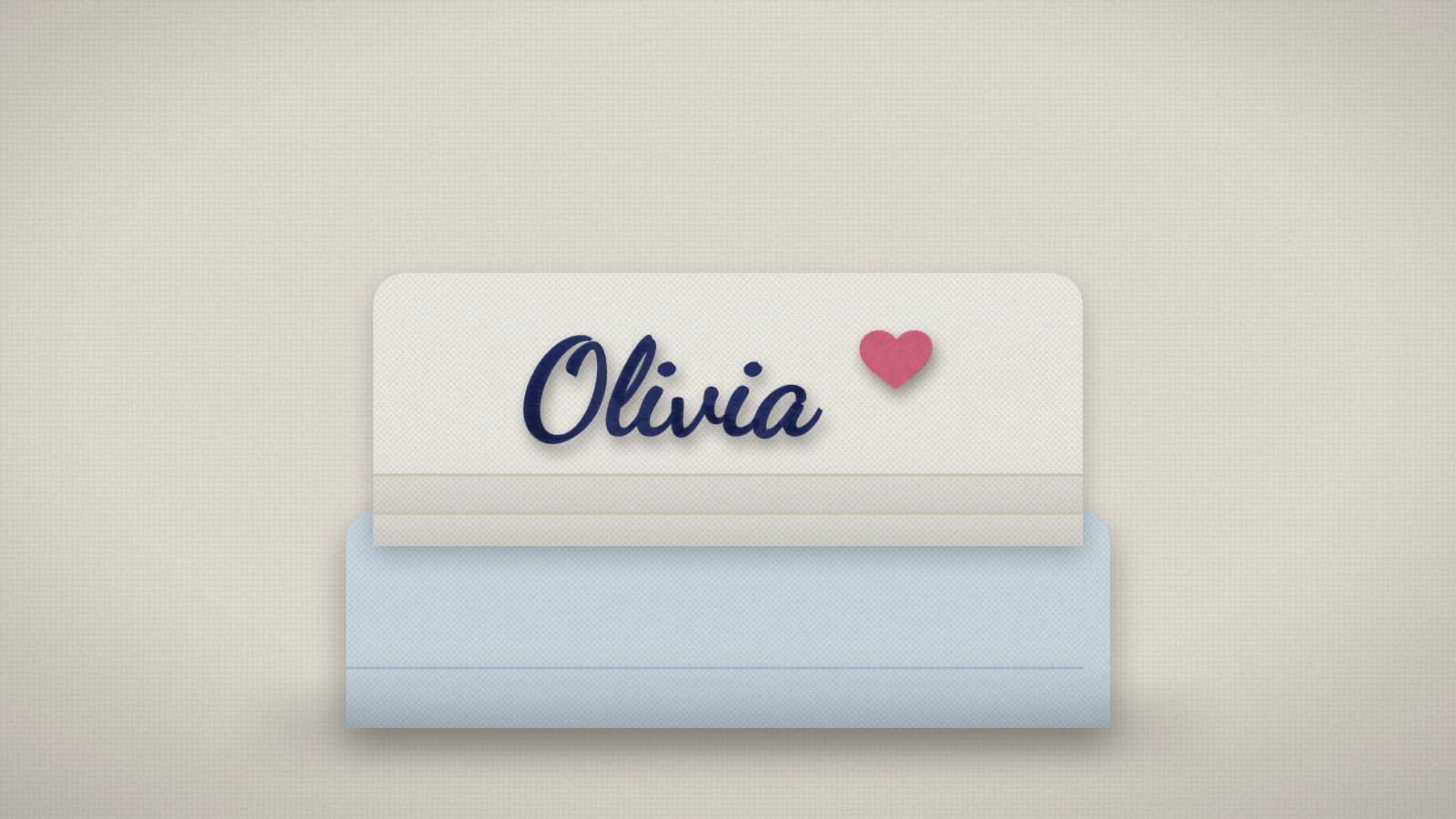
- Script names are the classic towel look. Choose a bold, connected script and keep it at least about 25 mm (1 in) tall, as the best fonts guide suggests for towels.
- Block capitals are the most readable choice for kids' towels, gym towels and short names.
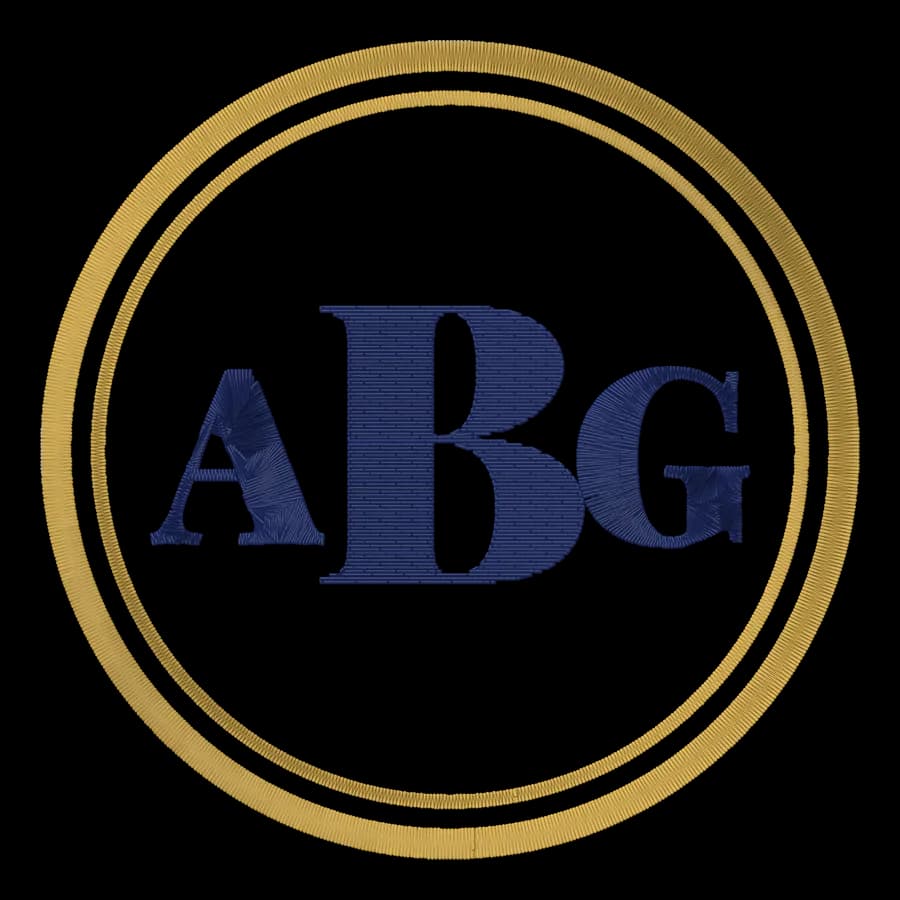
- Monograms traditionally put the surname initial larger in the middle. About 2–3 in (50–75 mm) tall suits most bath towels.
- Skip hairline serifs, thin outlines and small taglines. They disappear into the loops even with a topping.
To try your own name, the embroidery fonts page stitches it in 12 lettering fonts and shows the smallest size each one can be sewn. For a classic one- or three-letter monogram, the monogram maker sets the layout for you. Selling personalized towels? A short list of tested fonts and sizes keeps every order consistent; the page for Etsy sellers covers that workflow.
Hooping and setting up the file
Thick towels are hard to clamp in a standard hoop, and forcing one leaves a crushed ring in the pile. Two common ways around it:
- Float the towel. Hoop the stabilizer on its own, adhesive or with spray, then press the towel on top and lay the topping over it. Many embroiderers baste around the design area so nothing shifts.
- Use a magnetic hoop. It clamps thick terry without forcing the rings together and leaves fewer marks.
In the digitizer, choose the fleece preset (fleece, towel, sweatshirt). It adds heavy underlay to flatten the loops before the top stitches go on, slightly more pull compensation and a slightly denser satin. Fills hold terry down better than wide satin, which can sink between loops, so very large letters look best filled.
Before you stitch a gift, test on a cheap towel with a similar pile. Pile depth varies a lot between towels, and one test shows whether the lettering is big and bold enough.
Washing and caring for embroidered towels
- Use polyester thread. Polyester embroidery thread generally holds its color through hot washes and bleach-based detergents better than rayon, which matters on towels.
- Rinse out the topping fully after stitching, or the design can feel stiff until the first wash.
- Trim the backing neatly, close to the stitches but not touching them, especially on bath towels where the back shows.
- Prewash cotton towels if you can. They can shrink a little in the first wash, and a dense design may pucker if the towel shrinks around it.
- Add a care card to gifts: wash warm with similar colors, avoid chlorine bleach on colored designs and tumble dry low.