Embroidery stabilizer finder
Choose what you're embroidering and how dense the design is, and get the backing, topping, needle and hooping that keep it flat and crisp. The full chart is below.
What are you embroidering?
Knits
Wovens
Hats
Home
Specialty
How dense is the design?
Recommendation
T-shirt
- Backing
- Medium cut-away (2.5 oz)
- Topping
- Not usually needed
- Needle
- 75/11 ballpoint
- Hooping
- Hoop the backing with the shirt, smooth but not stretched.
- Digitizer setting
- Knit (T-shirt, polo)
On light-colored shirts, no-show (poly) mesh doesn't shadow through. Avoid tear-away: knits stretch and the design distorts.
Choose the knit fabric setting for matching underlay and density
Stabilizer chart by fabric
Backing weights are typical starting points; test on a scrap of the same fabric first.
| Fabric | Light design | Medium design | Dense design | Topping | Needle |
|---|---|---|---|---|---|
| T-shirt | No-show mesh or light cut-away (1.5–2 oz) | Medium cut-away (2.5 oz) | Heavy cut-away (3 oz) or two layers | Not usually needed | 75/11 ballpoint |
| Polo (piqué) | No-show mesh (1.5 oz) | Medium cut-away (2.5 oz) | Heavy cut-away (3 oz) | Water-soluble topping for small text on piqué texture | 75/11 ballpoint |
| Hoodie or sweatshirt | Medium cut-away (2.5 oz) | Medium-heavy cut-away (2.5–3 oz) | Heavy cut-away (3 oz) or two layers | Water-soluble topping | 75/11 or 80/12 ballpoint |
| Performance or stretch | No-show mesh, fusible if possible | No-show mesh plus light cut-away | Medium cut-away (2.5 oz), fusible | Not usually needed | 70/10 or 75/11 ballpoint |
| Beanie (rib knit) | Sticky tear-away, floated | Light cut-away | Medium cut-away (2.5 oz) | Water-soluble topping on chunky knits | 75/11 ballpoint |
| Woven shirt (cotton, oxford) | Light tear-away (1.5 oz) | Medium tear-away (2 oz) | Medium cut-away or two layers of tear-away | Not needed | 75/11 sharp |
| Denim or canvas | Medium tear-away (2 oz) | Medium-heavy tear-away (2.5 oz) | Two layers of tear-away or a cut-away | Not needed | 80/12 or 90/14 sharp (jeans needle on heavy denim) |
| Tote bag | Medium tear-away (2 oz) | Medium tear-away (2 oz) | Cut-away (2.5 oz) | Not needed | 80/12 or 90/14 sharp |
| Structured cap | Cap backing (heavy tear-away) | Cap backing (heavy tear-away) | Two layers of cap backing | Not usually needed | 75/11 or 80/12 sharp |
| Towel (terry) | Tear-away or wash-away | Medium tear-away (2 oz) | Medium tear-away plus wash-away | Water-soluble topping, always | 75/11 or 80/12 sharp |
| Leather or vinyl | Medium tear-away, floated | Medium tear-away, floated | Medium cut-away, floated | Not needed | 75/11 or 80/12 sharp or leather needle |
| Sheer or lightweight (silk, organza) | Wash-away (water-soluble) mesh | Wash-away mesh, two layers | Not recommended: choose a lighter design | Optional wash-away film | 65/9 or 70/10 sharp |
The stabilizers, in plain words
Cut-away
Stays in the garment for good. The choice for T-shirts, polos, sweatshirts and anything that stretches.
Tear-away
Torn away after stitching. For stable wovens: denim, canvas, twill, woven shirts and towels.
No-show mesh
A soft, thin cut-away that doesn't shadow through light colors. Ideal for light knits and performance wear.
Wash-away
Dissolves in water. For sheer fabrics and free-standing lace, and as a topping on pile fabrics.
Topping
A water-soluble film on top of towels, fleece and piqué that keeps stitches from sinking in.
Cap backing
A stiff tear-away sized for cap frames, supporting the curved front of a structured cap.
Free account
Start digitizing in under a minute
Create a free account to digitize any image, try every setting and watch it sew. Choose a plan only when you want to download files.
- Digitize and preview any image
- Realistic stitch preview and sew-out
- Download free ready-made designs
- No credit card needed

Questions
The quickest way to see what it does with your artwork is to try it. With a free account, digitizing and previewing cost nothing and take about a minute.
Which stabilizer should I use for a T-shirt?
A cut-away. Knits stretch, and a tear-away lets the design distort once it's removed. Use no-show (poly) mesh on light-colored shirts, a medium 2.5 oz cut-away for a typical logo, and a heavier one for dense designs.
What's the difference between cut-away and tear-away?
Cut-away stays in the garment and supports the stitches for good, which knits need. Tear-away is torn off after stitching and suits stable wovens like denim, canvas and woven shirts.
When do I need a topping?
On fabrics with a pile or texture, such as towels, fleece, velvet and piqué. A water-soluble topping keeps stitches on the surface so lettering stays crisp.
Does the digitizer change anything for the fabric?
Yes. Choose the fabric setting in the digitizer (woven, knit, stretch, fleece and towel, or leather) and it adjusts the underlay, density and pull compensation to match.
More tools
Keep going
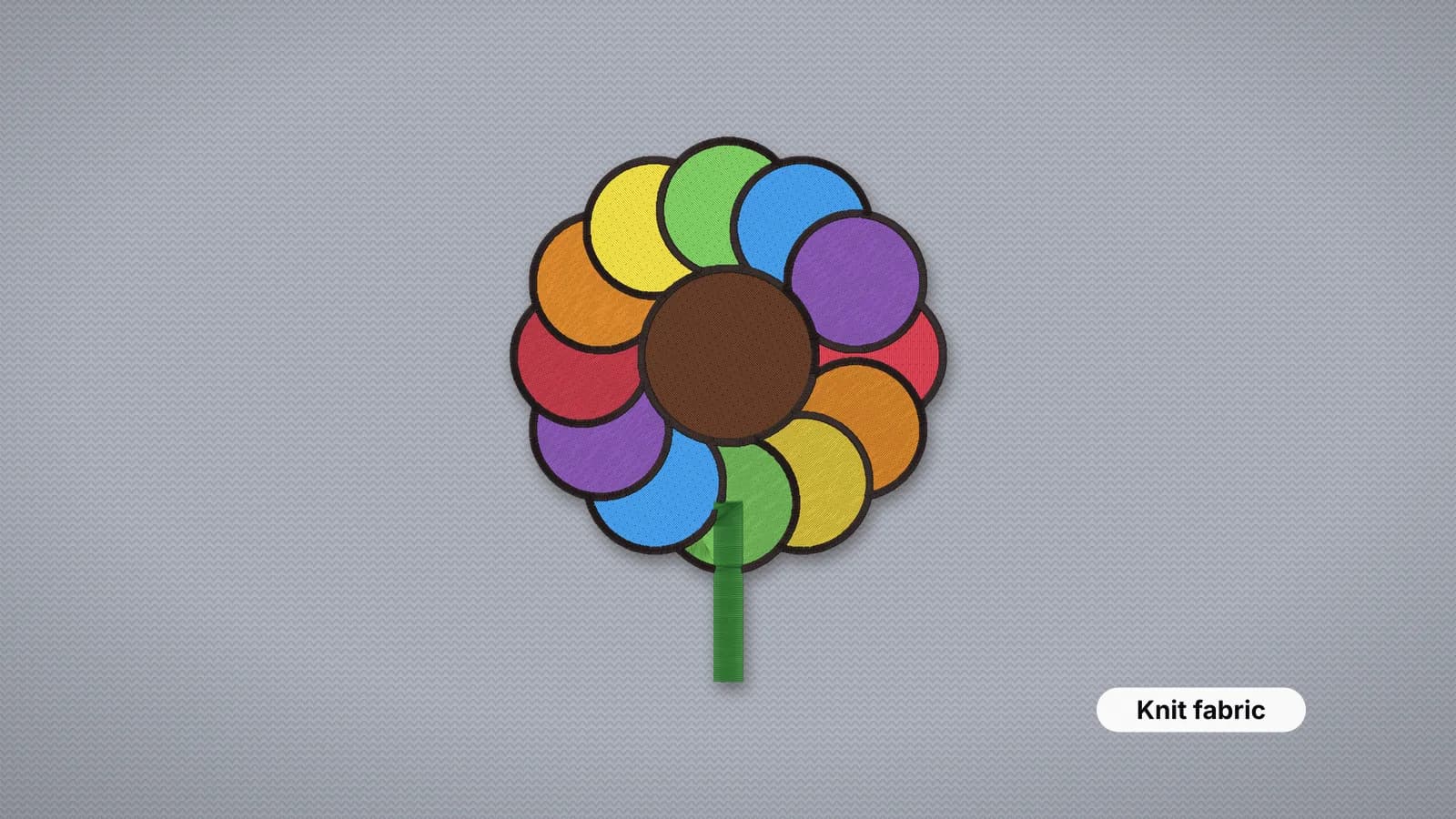 GuideEmbroidery stabilizer guide: which backing for which fabricThe stabilizer types, which one each fabric needs and how to hoop for a flat, pucker-free result.Read the guide
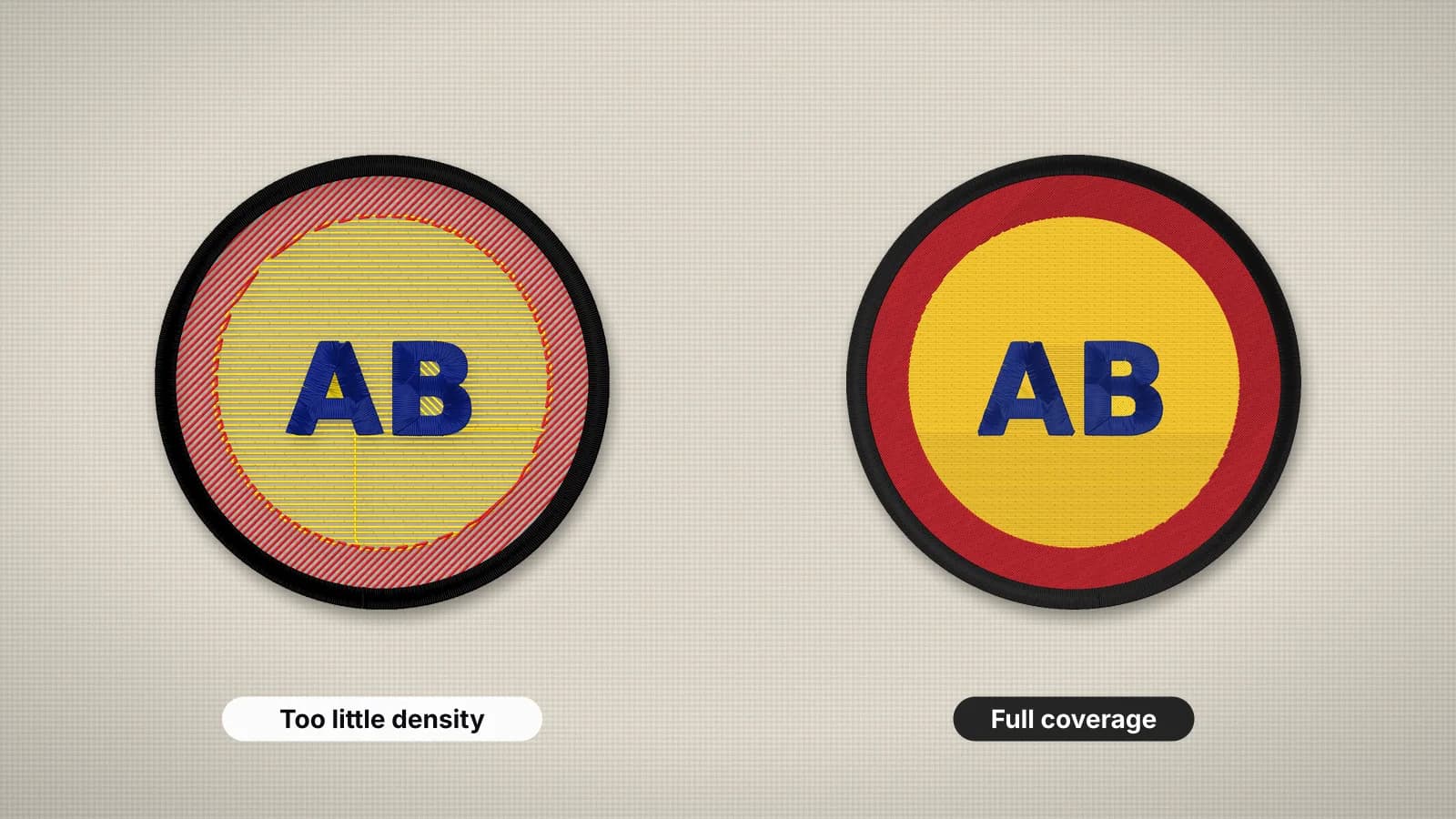 GuideCommon embroidery problems and how to fix themA troubleshooting table for the most common embroidery problems, what causes each one and whether the fix is in the file, the hooping or the machine.Read the guide
 GuideHow to embroider a hoodieHow to hoop a thick hoodie, where designs go and how big, which backing and topping to use, and how to set up the file for fleece.Read the guide
 Free previewEmbroidery file converterConvert PES, DST, JEF, EXP, VP3 and XXX files to any other machine format.Open
 Free toolEmbroidery file viewerOpen DST, PES, JEF and more in your browser: stitch preview, colors, size and stitch count.Open
 Free previewText to embroidery fileType a name or monogram, pick a font and download a ready-to-sew lettering file.Open
Stabilizer sorted. Now the design.
Upload your logo, pick the matching fabric setting and download a file tuned for it.