Stitch density calculator
Convert stitch spacing between millimeters and lines per inch, see how many stitches fill and satin put into each square inch, and estimate a design's stitch count at any density.
Stitch spacing
A design to estimate
At 0.40 mm spacing
4,037
estimated stitches for the design above
- Rows per inch
- 63.5
- Rows per mm
- 2.50
- Fill: stitches / in²
- 710
- Satin: stitches / in²
- 1,548
- Fill: stitches / cm²
- 110
- Satin: stitches / cm²
- 240
Fill spacing by fabric, as the digitizer sets it
- Woven (cotton, twill, denim)0.40 mm
- Knit (T-shirt, polo)0.43 mm
- Stretch (performance, jersey)0.45 mm
- Fleece, towel, sweatshirt0.40 mm
- Leather, vinyl0.50 mm
Density in every unit
mm ↔ lines per inch
Type either one; the other updates.
Stitches per area
Fill and satin per square inch, per square centimeter and per row.
Design estimate
Stitch count for a design of any size, coverage and satin share.
Fabric presets
The fill spacing the digitizer uses for wovens, knits, stretch, fleece and leather.
Same numbers everywhere
Matches the stitch count calculator and the stitch count chart.
Measured
Based on designs from this digitizer, including underlay and travel.
Choosing a density
- Start at 0.4 mm and only change it for a reason: fabric, thread weight or a visible problem.
- Open up the spacing on stretchy or thin fabrics, and on leather where every hole is permanent.
- Tighten slightly for small lettering so the satin covers the fabric.
- If fabric shows through a fill, check the underlay before making it denser.
Free account
Start digitizing in under a minute
Create a free account to digitize any image, try every setting and watch it sew. Choose a plan only when you want to download files.
- Digitize and preview any image
- Realistic stitch preview and sew-out
- Download free ready-made designs
- No credit card needed



Questions
The quickest way to see what it does with your artwork is to try it. With a free account, digitizing and previewing cost nothing and take about a minute.
What is a good stitch density for embroidery?
Around 0.4 mm between rows (about 63 rows per inch) is a common default for fills and satin. Lighter fabrics and leather often use 0.45–0.5 mm; dense, small details can go slightly tighter.
How do I convert density from mm to lines per inch?
Divide 25.4 by the spacing in mm. 0.4 mm is 63.5 lines per inch; 0.5 mm is 50.8.
How many stitches per square inch is embroidery?
With this digitizer at 0.4 mm spacing, fills average about 710 stitches per square inch and satin about 1,550, including underlay. Real counts vary with stitch length, underlay and shape.
Does higher density look better?
Not past a point: too dense makes designs stiff, can pucker the fabric and break thread. Enough density to cover the fabric is the goal.
More tools
Keep going
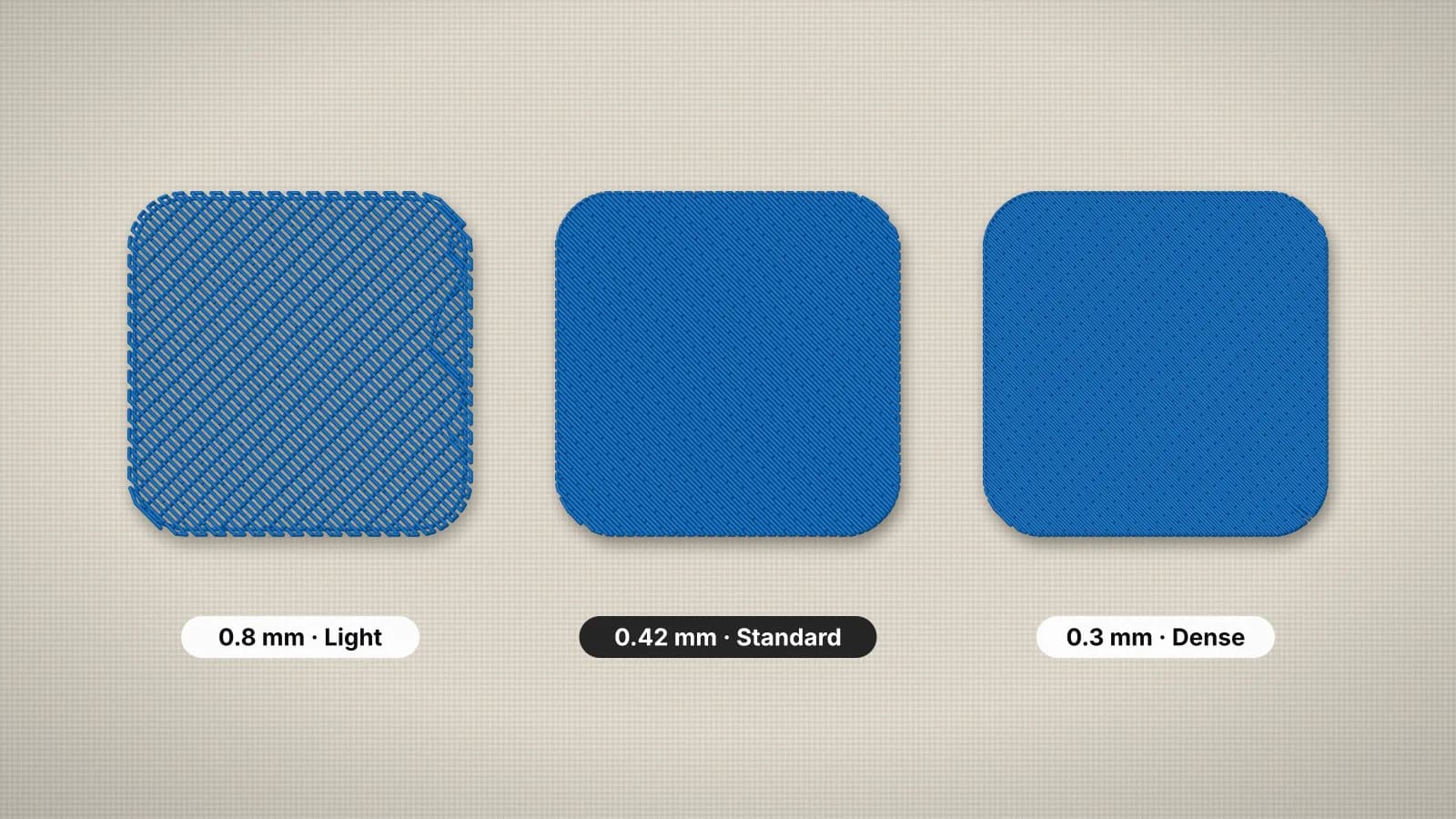 GuideEmbroidery stitch density explainedWhat density means in embroidery, typical spacing for fill and satin, how fabric and thread change it, and what it does to stitch count, sew time and stiffness.Read the guide
 GuideSatin stitch vs fill stitch: when to use eachHow satin, tatami fill and running stitches differ, the widths each one suits, and how to choose.Read the guide
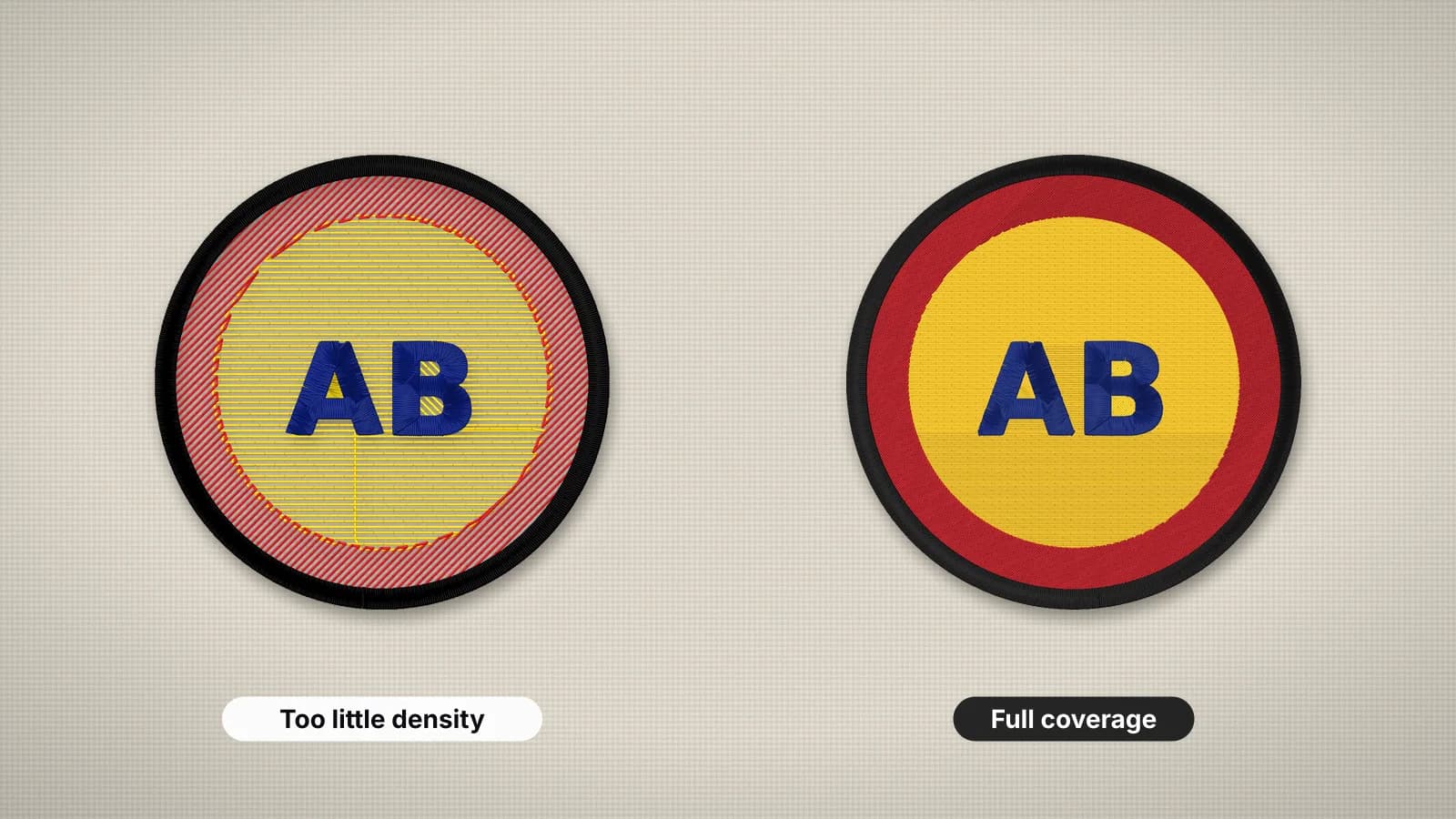 GuideCommon embroidery problems and how to fix themA troubleshooting table for the most common embroidery problems, what causes each one and whether the fix is in the file, the hooping or the machine.Read the guide
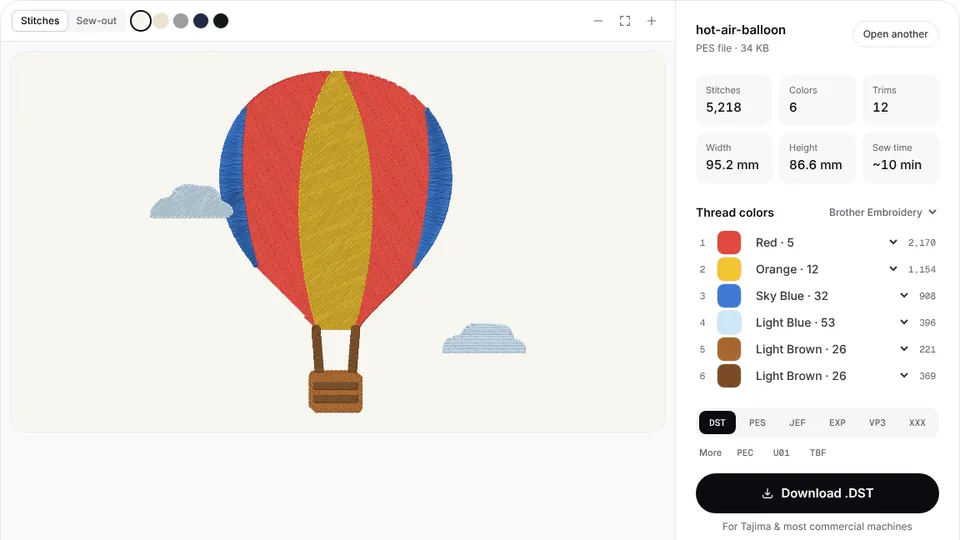 Free previewEmbroidery file converterConvert PES, DST, JEF, EXP, VP3 and XXX files to any other machine format.Open
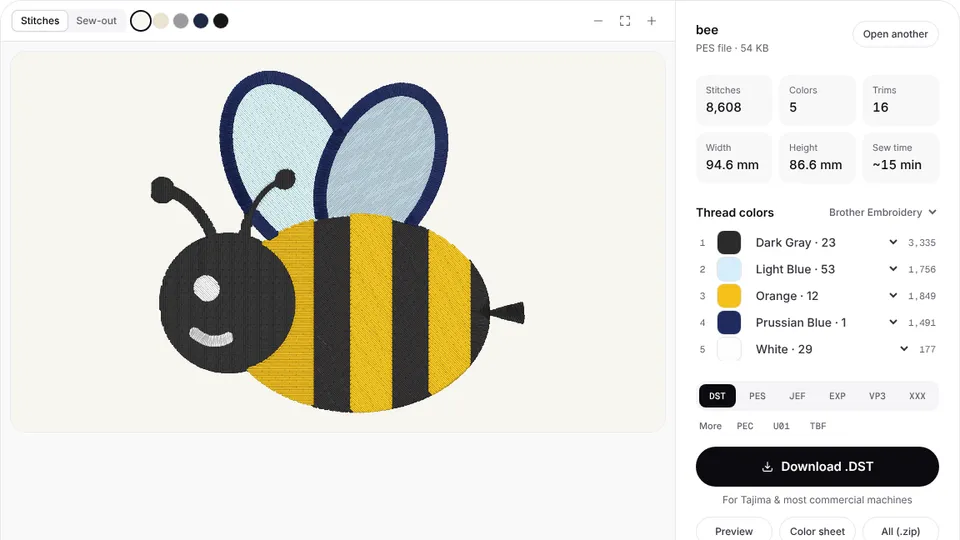 Free toolEmbroidery file viewerOpen DST, PES, JEF and more in your browser: stitch preview, colors, size and stitch count.Open
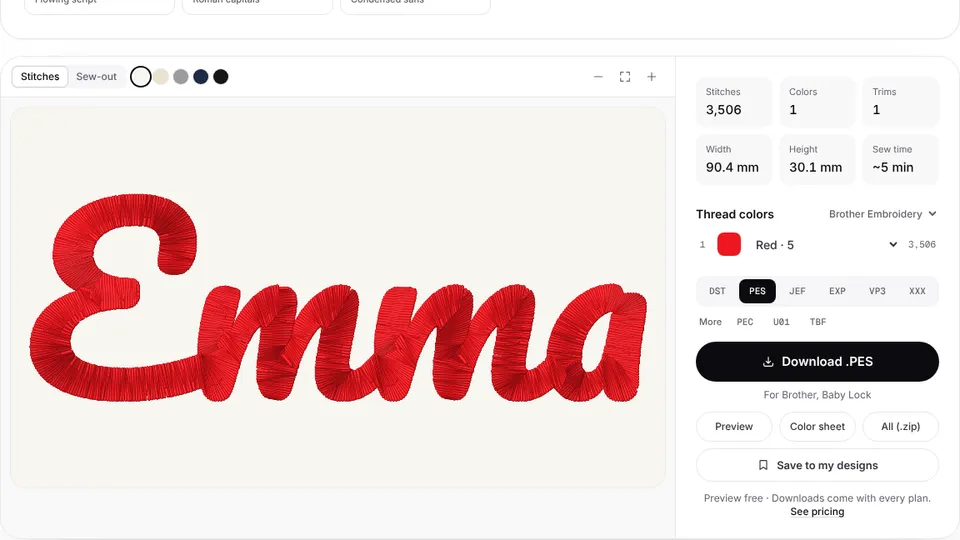 Free previewText to embroidery fileType a name or monogram, pick a font and download a ready-to-sew lettering file.Open
Density set for the fabric
The digitizer picks spacing, underlay and pull compensation for the fabric you choose.