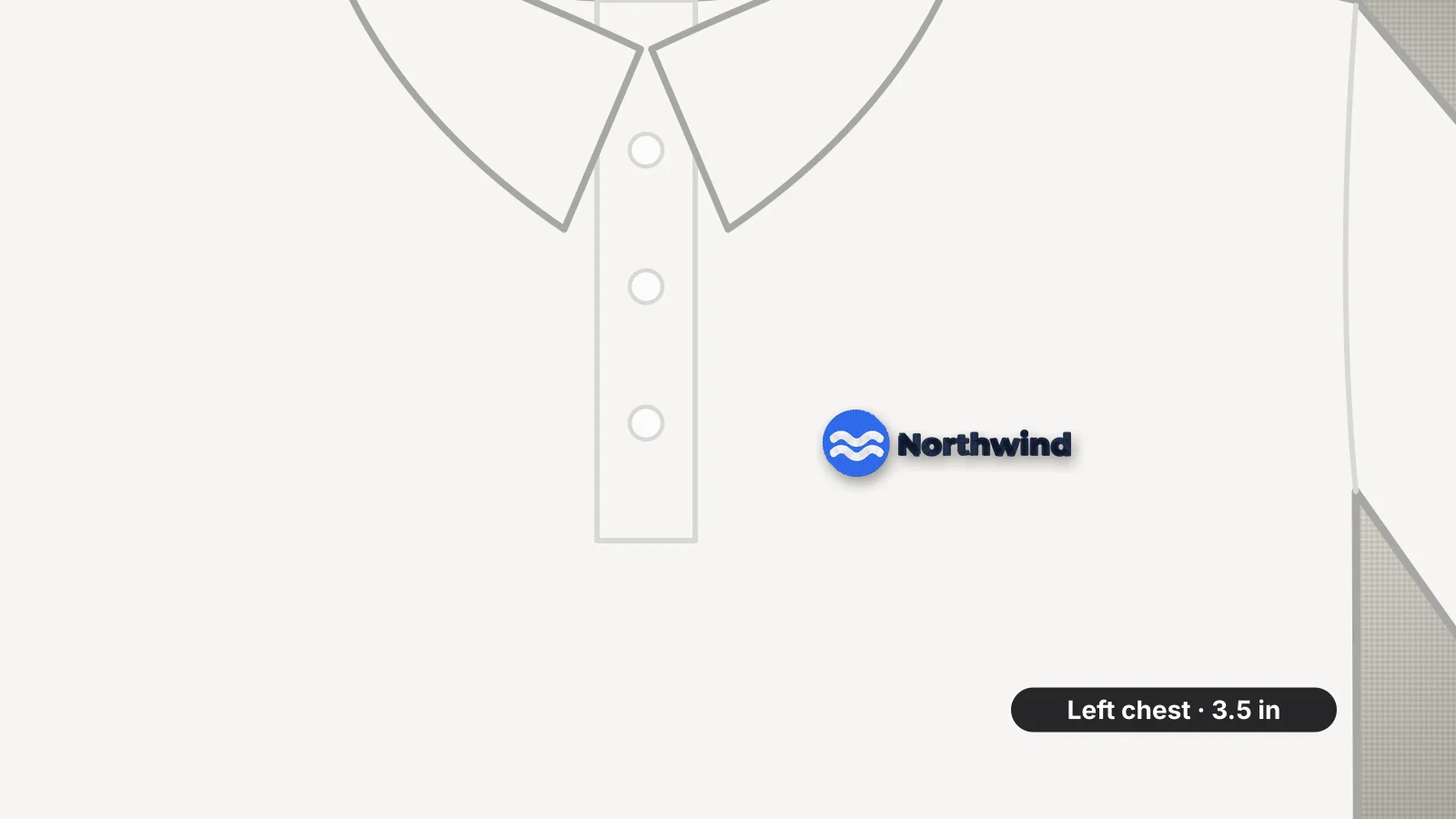
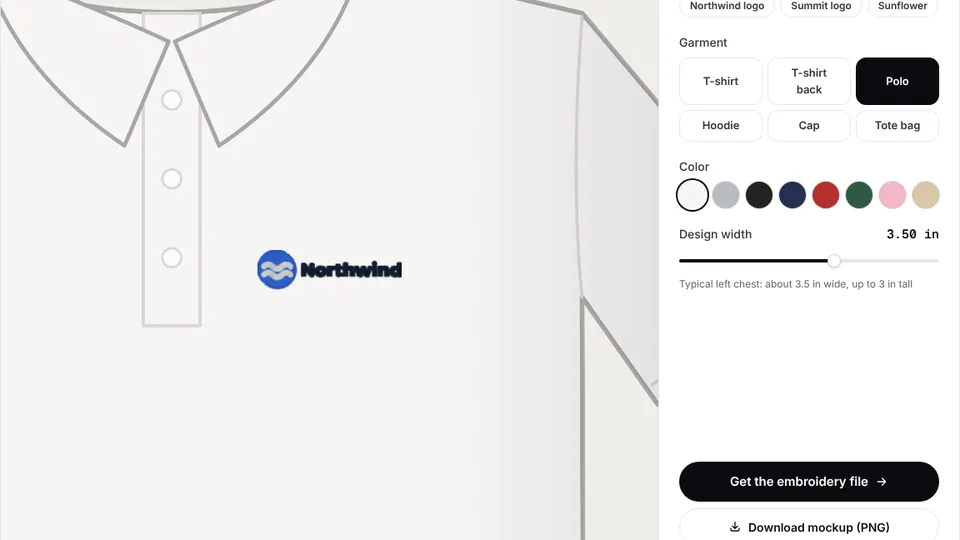
 Free toolEmbroidery mockup generatorPut your logo on a t-shirt, polo, hoodie, cap or tote, digitized and stitched at its real size.Open the tool
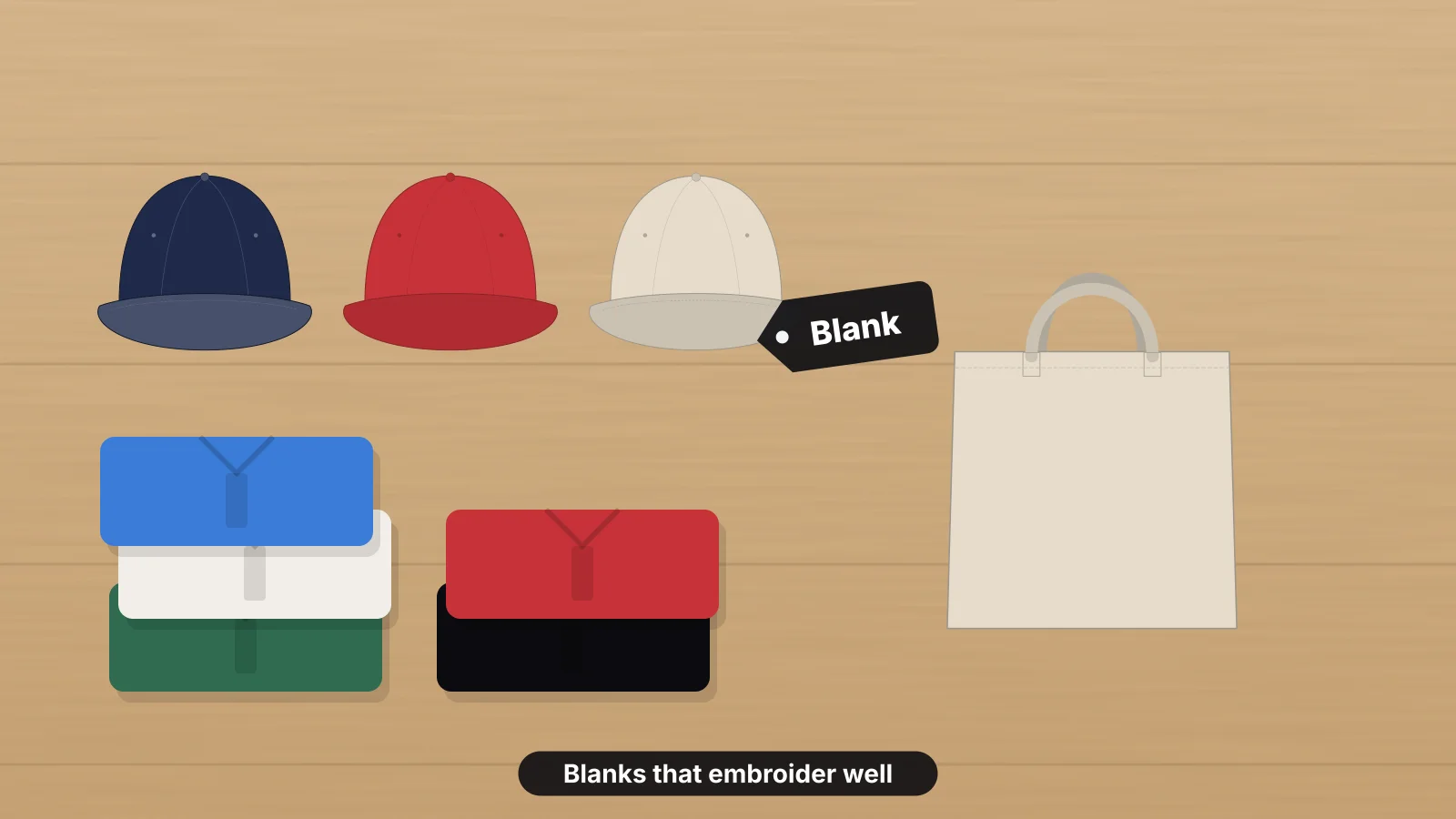
A good blank does half the work before you thread a needle: it hoops flat, holds stitches without puckering and looks the same when the customer reorders. A thin, stretchy or slippery one can make a well-digitized logo look bad, and no file setting fully fixes it.
This guide covers what makes a garment good to embroider, the best polos, tees, hoodies, caps, totes and towels, with styles from Gildan, Port Authority, Bella+Canvas, Comfort Colors, Carhartt, Richardson and others, the stabilizer and needle for each, and where businesses and hobbyists buy them. Fabric weights are the makers' listed weights in ounces per square yard; styles change, so check the current spec sheet before you order.
What makes a good blank for embroidery?
A good embroidery blank is stable, mid- to heavyweight and tightly made, so it carries a few thousand stitches without puckering, sagging or letting the backing show through. Check these before you buy a style in bulk:
| What to check | Look for | Be careful with |
|---|---|---|
| Fabric weight | Tees of about 5–6.75 oz, piqué polos of 5 oz, fleece of 8 oz or more | Tees under about 4.5 oz with anything bigger than a small, light logo |
| Weave or knit | Tight piqué, smooth jersey, twill, canvas and dense terry | Loose or open knits, waffle and slub textures, which swallow small text |
| Stability and fiber | Cotton and cotton-poly blends that don't stretch much | High-spandex blends and slippery performance polyester, which need extra care |
| Structure, on caps | Front panels backed with buckram, a stiff layer that holds the shape | Very soft fronts under dense logos |
| Construction | A clear, seam-free area where the design goes | Seams, pockets, zips and plackets in the way of the logo |
Check the fiber of each color, not just the style. Some colors are a different blend from the rest: the Gildan 5000 is 100% cotton in most colors, but several, including some heathers, are 50/50 cotton/polyester, and the heathers of the Independent Trading Co. SS4500 hoodie are 55/45. The blend changes how the fabric behaves under the needle and in the wash.
Pick styles that stay in a maker's core line. For a business, a blank you can reorder in the same color for years matters more than saving 50¢ on a style that's gone next season.
Which polos, tees and hoodies embroider best?
A 5 oz piqué polo is the easiest shirt to embroider well, a midweight cotton tee of about 5.3–6.75 oz holds a logo better than a thin fashion tee, and an 8–8.5 oz fleece hoodie with a smooth face takes almost any chest design. These styles are widely used by embroiderers and stocked by the big distributors:
| Garment | Style | Fabric | Good to know |
|---|---|---|---|
| Polo | Port Authority K500 Silk Touch | 5 oz, 65/35 polyester/cotton piqué | The standard corporate polo, in a wide range of colors; easy to hoop and embroider |
| Performance polo | Sport-Tek ST650 Micropique Sport-Wick | 3.8 oz, 100% polyester | Light and smooth: keep logos light, and use no-show mesh or cut-away and a ballpoint needle |
| Tee | Gildan 5000 Heavy Cotton | 5.3 oz, 100% cotton in most colors | A budget staple that holds a left chest logo well |
| Tee | Comfort Colors 1717 | 6.1 oz ring-spun cotton, garment-dyed | Heavy and soft with a washed look; garment-dyed shades can vary slightly between batches |
| Tee | Bella+Canvas 3001 | 4.2 oz combed ring-spun cotton | A soft retail fit, but thin: small, open logos with no-show mesh |
| Workwear tee | Carhartt K87 Workwear Pocket Tee (CTK87 at SanMar) | 6.75 oz, 100% cotton jersey | Heavy and stable; the pocket and its Carhartt label take the left chest, so plan the logo above the pocket, on a sleeve or on the back |
| Hoodie | Gildan 18500 Heavy Blend | 8 oz, 50/50 cotton/polyester | The budget hoodie most shops stock |
| Hoodie | Independent Trading Co. SS4500 | 8.5 oz, 80/20 cotton/polyester, with a cotton face on solid colors | A smooth face for clean lettering |
Woven shirts such as oxfords and twill work shirts are stable and take tear-away stabilizer. For placement, hooping and backing on each garment, see how to embroider a polo shirt, how to embroider a T-shirt and how to embroider a hoodie.
Try it with your own design
Sign up free, upload an image and get a stitch preview in under a minute.
Drop your image here
PNG, JPG, SVG, PDF or AI · stays on your device
Not sure what to expect? See real examples or how it works.
Which blank caps embroider best?
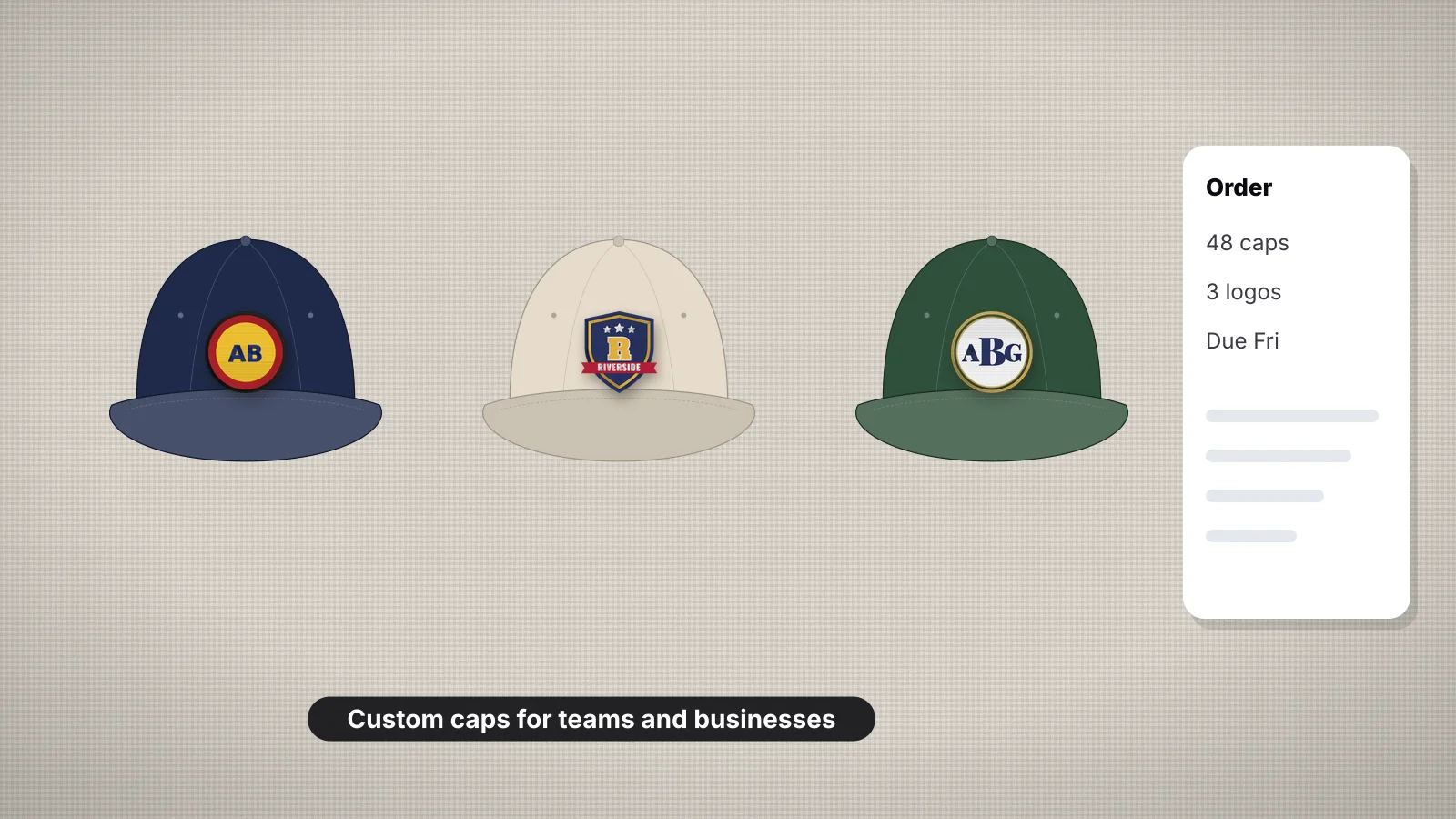
Structured mid-profile six-panel caps embroider best: the buckram-backed front holds the logo firm and gives about 2–2.25 in (50–57 mm) of height to work with. Unstructured dad hats and foam-front truckers sell well too, but each has a trade-off.
| Cap type | Popular styles | Embroidery | Trade-offs |
|---|---|---|---|
| Structured mid-profile trucker | Richardson 112 (60/40 cotton/polyester front, mesh back); Yupoong 6606 (65/35 polyester/cotton) | The easiest to stitch on a cap frame, and holds dense logos | Snapback, one size; keep small text off the center seam |
| Structured fitted cap | Flexfit 6277 (63/34/3 polyester/cotton/spandex, closed stretch back) | A firm front and a clean look | Sold in sizes such as S/M and L/XL, so you stock more than one |
| Unstructured dad hat | Yupoong 6245CM (100% cotton chino twill, low profile) | Hoops flat on a home machine | The soft front puckers under dense fills; keep logos lighter and about 1.75–2 in tall |
| Foam-front trucker | Otto Cap 39-165 | A retro look | The foam is soft, so dense stitching sinks in and can cut it; use light, open designs, as Printful advises for this cap |
| Five-panel | Several makers | One seamless front panel | Good for detail across the middle |
| Beanie | Carhartt Watch Cap 2.0 (CT104597, which replaced the A18) | Stitched on the cuff | Rib knit stretches; keep designs short and light |
Caps from different makers sit differently in a cap frame, so test one of each before you commit. The hat embroidery guide covers cap sizes, frames and sewing order, how to start a custom hat business covers buying caps by the case and pricing them, and the hat embroidery price chart shows typical charges per cap.
Which tote bags and towels are best for embroidery?
Choose cotton canvas totes of about 10–12 oz and dense cotton terry towels with a flat woven border, and skip thin non-woven promotional bags and loosely looped towels.
- Canvas totes: heavy canvas holds a 6–8 in design without puckering and needs only a medium tear-away. Lightweight cotton totes work with cut-away and lighter designs.
- Totes made for embroidery: some, such as Kimberbell's blank canvas totes, come with the side seams open, so you hoop the flat panel and sew the seams afterwards.
- Non-woven polypropylene bags: the needle perforates them, so dense stitching can tear out. Keep to a small, light design, or choose canvas.
- Jute and burlap: coarse and loose; use bold, simple designs and a stabilizer that stays in.
- Towels: 100% cotton terry with tight loops and a flat woven border to stitch on or above. Thin, loose terry lets letters sink, so always add a water-soluble topping.
- Golf and sports towels: smaller and often lighter; a name or small logo near the hem works best, as how to embroider a golf towel shows.
How to embroider a tote bag and how to embroider towels cover design sizes, placement and hooping for each.
Which stabilizer and needle does each blank need?
Match the stabilizer to how much the fabric moves and the needle to how it's made: a ballpoint for knits, a sharp for wovens and caps. Start with this table, then test on your own blanks:
| Garment | What to look for | Stabilizer | Needle |
|---|---|---|---|
| Piqué polo | 5 oz or heavier, a tight piqué | No-show mesh or medium cut-away; a topping for small text (polo backing) | 75/11 ballpoint |
| T-shirt | 5.3 oz or heavier cotton or cotton blend | Medium cut-away, or no-show mesh on light colors (T-shirt backing) | 75/11 ballpoint |
| Performance polo or tee | Smooth polyester that doesn't snag | No-show mesh or cut-away, plus a fusible if it shifts | 70/10 or 75/11 ballpoint |
| Hoodie or sweatshirt | 8 oz or heavier, with a smooth face | Medium cut-away plus a water-soluble topping (hoodie backing) | 75/11 or 80/12 ballpoint |
| Woven shirt | Oxford, poplin or twill | Medium tear-away | 75/11 sharp |
| Structured cap | A buckram front, mid profile | Cap tear-away (cap backing) | 75/11 or 80/12 sharp |
| Unstructured cap | Firm cotton twill | Firm tear-away or cut-away | 75/11 sharp |
| Beanie | A thick rib-knit cuff | Cut-away or tear-away, plus a topping | 75/11 ballpoint |
| Canvas tote | 10–12 oz canvas | Medium tear-away; cut-away on thin cotton (tote backing) | 80/12 or 90/14 sharp |
| Towel | Dense cotton terry with a flat border | Tear-away or cut-away, plus a water-soluble topping (towel backing) | 75/11 or 80/12 sharp |
The stabilizer finder gives the backing, topping, needle and hooping for a fabric and design density, and the embroidery stabilizer guide explains each type of backing and when to use two layers.
Where can you buy blank shirts and hats for embroidery?
Businesses buy from wholesale distributors such as SanMar and S&S Activewear, which sell through a business account; hobbyists and new shops can buy single pieces from online blank retailers such as Jiffy and ShirtSpace, which have no order minimums.
| Source | Examples | Who can buy | Good to know |
|---|---|---|---|
| Wholesale distributors | SanMar; S&S Activewear, which bought alphabroder in 2024 and has folded its products into S&S | Businesses, through a business account | The lowest prices, huge stock and fast regional shipping; a resale certificate lets you buy without paying sales tax |
| Online blank retailers | Jiffy, ShirtSpace | Anyone | No order minimums; prices usually a little above wholesale; good for samples and small orders |
| Cap and blank specialists | Online blank-cap shops | Anyone | Wide cap ranges, often with lower prices by the case |
| Sewing and embroidery dealers | Kimberbell blanks at sewing machine dealers | Anyone | Blanks made for home embroidery, such as totes with open side seams; higher prices |
| Retail stores and marketplaces | Amazon, Walmart and craft stores | Anyone | Handy for one sample; the least consistent source, with styles and colors that change |
What a wholesale account asks for. Expect to give your business name, address and type of business, and sometimes a federal EIN or state tax ID. To buy blanks you'll resell without paying sales tax, you file a resale certificate, which uses the number on your state seller's permit. S&S Activewear, for example, asks business customers for business information and a state resale certificate where it applies, lets personal customers shop at retail pricing and has no minimum piece requirement. SanMar is set up for decorators and promotional products businesses, and its credit application asks for a resale number. Net payment terms usually need credit references on top.
A resale certificate covers only the blanks you resell; you still collect sales tax on your own sales where your state requires it, and the rules vary by state. If you're ordering merch for your own company rather than reselling, embroidery for small business merch covers working with a shop that supplies the garments.
Why should you order samples first?
Order one piece of each style and color you plan to use and stitch your real design on it, because weight, shade, fit and how the fabric takes stitches only show on the actual garment. A sample costs a few dollars; a box of the wrong polo costs far more.
- Stitch the real design at the real size, with the stabilizer and needle you'll use for the order.
- Wash it the way the customer will, then check for puckering, shrinkage around the logo and backing showing through.
- Check the colors in daylight, thread against garment. Garment-dyed and heather colors vary the most.
- Try the fit and sizes, especially on fitted caps and women's cuts, which run differently from brand to brand.
- Test caps in your frame. Brim shape, seam height and crown depth change how each cap sits on the cap frame.
- Write down the winners: brand, style number, color name, stabilizer and needle. Style numbers change, as the Carhartt beanie's did when the A18 became the Watch Cap 2.0 (CT104597), so recheck the spec sheet at each reorder.
Keep a sample board or a shelf of stitched samples. Customers choose faster when they can touch a garment with a logo on it, and it's the easiest way to show the difference between a $4 blank and a $10 one.
Practice on a free design
167 ready-to-sew designs in every machine format, free with an account.

Matching the file to the blank with Embrizo
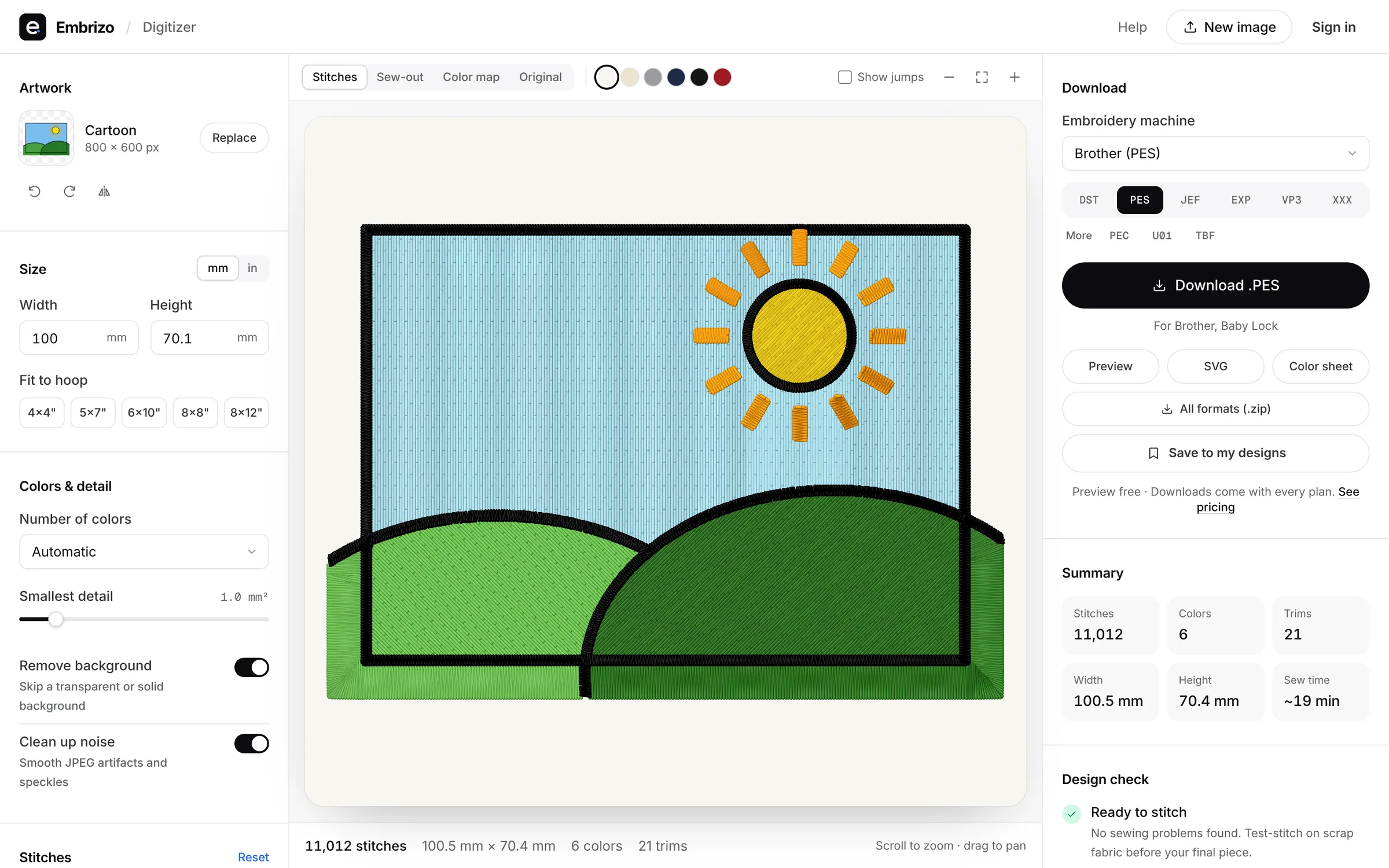
The best blank still needs a file made for it. In the digitizer, you upload the logo and then set it up for the garment:
- Pick the fabric preset: knit for polos and tees, stretch for performance wear, fleece for hoodies, sweatshirts and towels, woven for caps, totes and work shirts, and leather for leather and vinyl. Each preset sets the underlay, density and pull compensation for that fabric.
- Set the width for the placement, such as 3.5 in on a left chest or 4 in on a cap, and save each size as its own design.
- Check the design in the stitch preview and design check, which flag details too fine to stitch, too many colors and high stitch counts, before you stitch a sample.
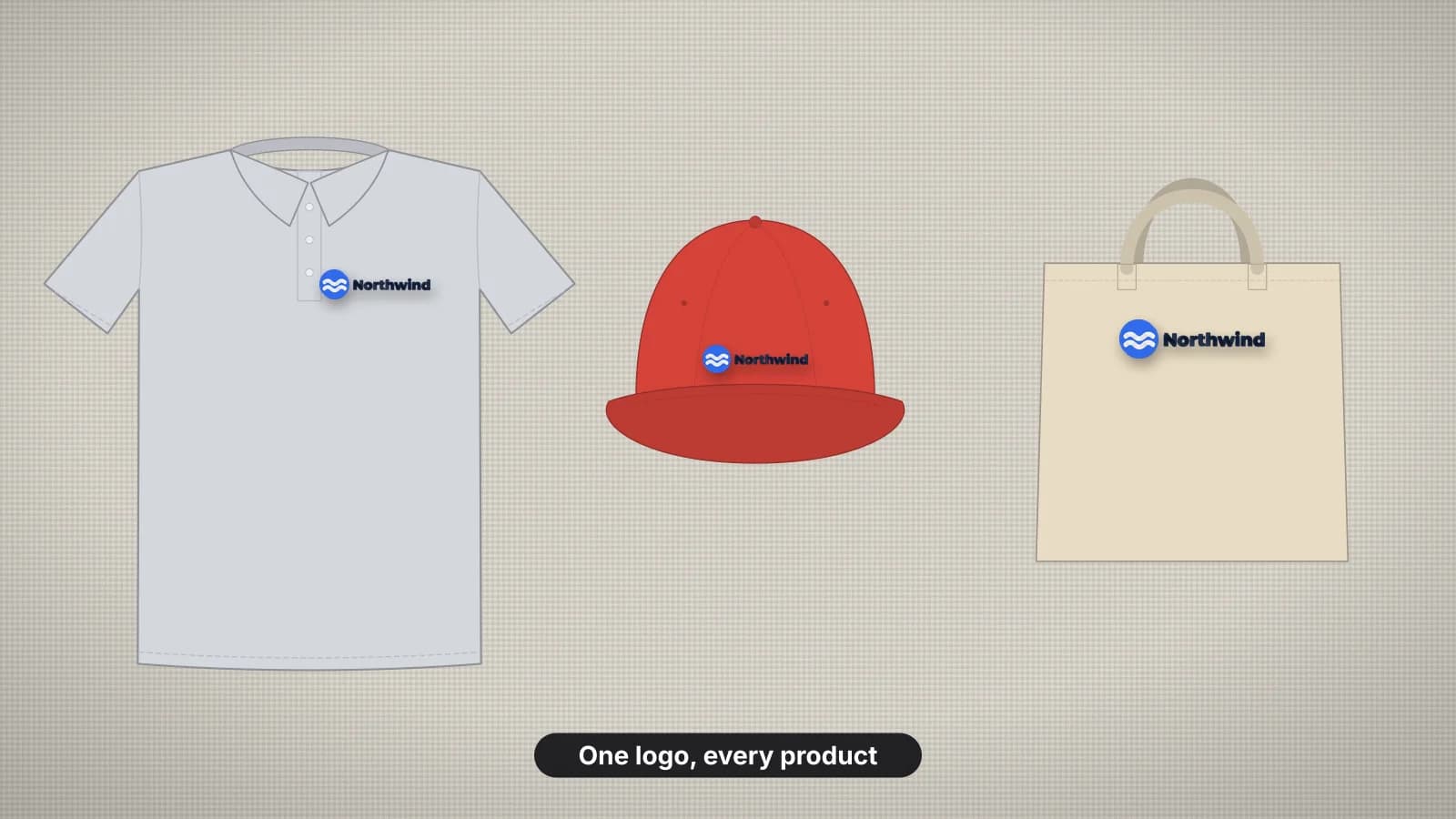
- Show the customer first: the embroidery mockup generator puts your logo on a T-shirt, polo, hoodie, cap or tote, stitched at its real size, as a proof before you buy the blanks.
Embrizo doesn't sell blanks, stabilizer or thread, and it can't tell you a distributor's current stock or prices. Digitizing and previews are free with an account; downloading files needs a plan.