Underlay and pull compensation set for your fabric
Stitches pull fabric in and sink into soft materials. Embrizo sews underlay first and widens every shape by the pull compensation your fabric needs, from a fabric preset you pick in one click.
- Free stitch preview
- 9 machine formats
- Runs in your browser
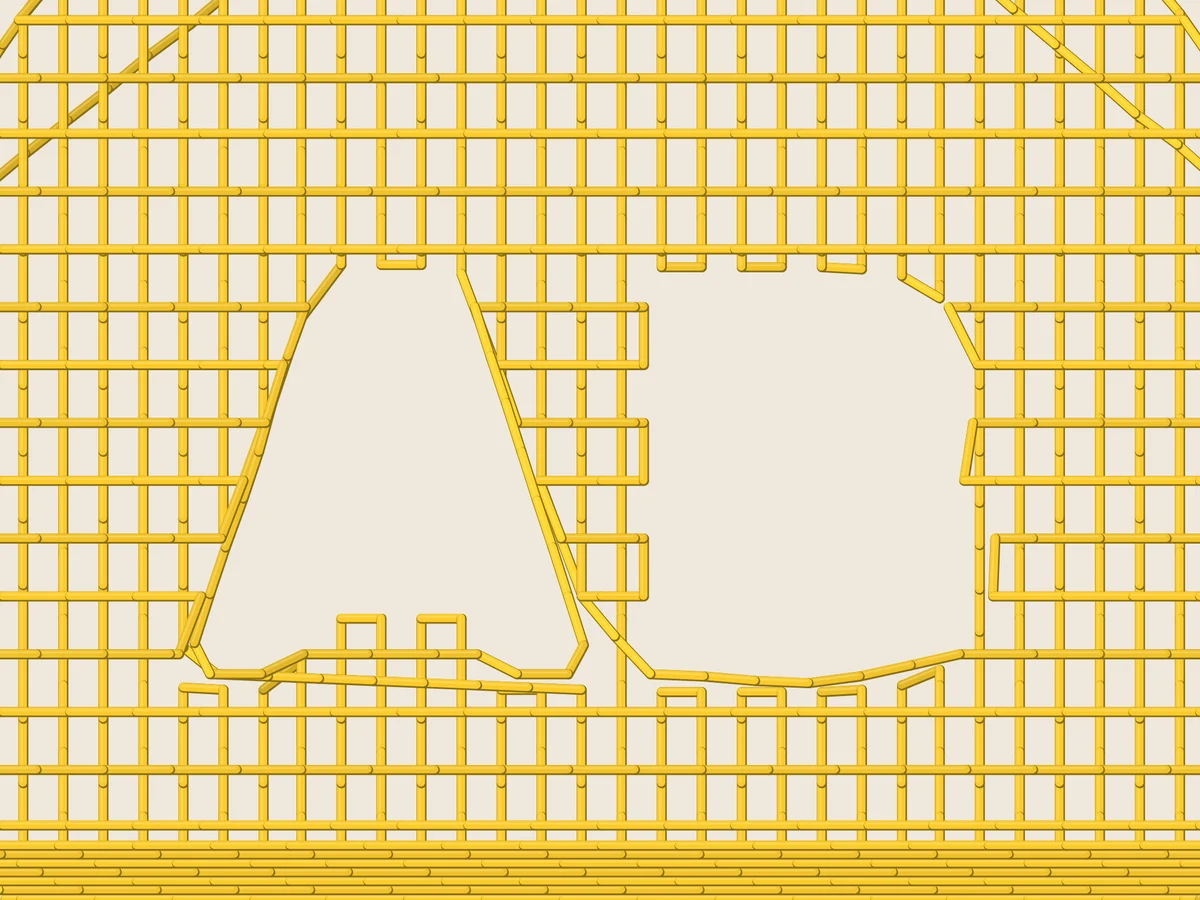
- Fabric presets
- 5
- Fabric presets
- Pull compensation per side
- 0.1–0.35 mm
- Pull compensation per side
- Underlay levels, or none
- 3
- Underlay levels, or none
- Overlap under later colors
- 0.3 mm
- Overlap under later colors
Underlay matched to each shape
Narrow satin gets a center run, medium columns an edge run along both sides, and wide columns an edge run plus zigzag. Fills get an edge walk and a layer of tatami across the top stitches, two layers on heavy. Heavier levels switch to the stronger kinds sooner.
- Center run, edge run and zigzag under satin
- Edge walk and cross-hatch under fills
- Light, standard, heavy or none

Pull compensation by fabric
Each shape is widened on both sides by the pull compensation of the fabric preset, so it sews to the size you drew instead of shrinking across the stitch direction. The presets below are the starting point; change any setting by hand.
- Wider on stretchy knits, narrower on leather
- Density lighter on knits so they stay soft
- Stabilizer advice with every preset
Free account · No credit card needed
Fabric presets
| Fabric | Fill spacing | Satin spacing | Pull compensation | Underlay | Stabilizer |
|---|---|---|---|---|---|
| Woven (cotton, twill, denim) | 0.4 mm | 0.4 mm | 0.2 mm | Standard | A tear-away stabilizer works for most woven fabrics. |
| Knit (T-shirt, polo) | 0.43 mm | 0.42 mm | 0.3 mm | Heavy | Use a cut-away stabilizer so the design keeps its shape. |
| Stretch (performance, jersey) | 0.45 mm | 0.44 mm | 0.35 mm | Heavy | Use a cut-away stabilizer and hoop the fabric without stretching it. |
| Fleece, towel, sweatshirt | 0.4 mm | 0.38 mm | 0.3 mm | Heavy | Add a water-soluble topping so stitches don't sink into the pile. |
| Leather, vinyl | 0.5 mm | 0.5 mm | 0.1 mm | Light | Every needle hole is permanent: use a sharp needle and test on scrap first. |
Try it on your own design
Drop a logo, drawing or lettering here and see it stitched, with every setting on this page applied, in about a minute.
Drop your image here
PNG, JPG, SVG, PDF or AI · stays on your device
Free tools for this
- Free toolStabilizer finderPick the fabric and design density to get the right backing, topping, needle and hooping.Open
- Free toolEmbroidery needle size chartThe right needle type and size for your fabric and thread, from 60/8 to 100/16.Open
- Free toolStitch density calculatorConvert stitch spacing to lines per inch and stitches per square inch, and estimate a design.Open
Free account
See your own design stitched
Create a free account to digitize any image, try every setting and watch it sew. Choose a plan only when you want to download files.
- Digitize and preview any image
- Realistic stitch preview and sew-out
- Download free ready-made designs
- No credit card needed



Underlay and pull compensation: questions
The quickest way to see what it does with your artwork is to try it. With a free account, digitizing and previewing cost nothing and take about a minute.
What does underlay do in machine embroidery?
Underlay is stitching sewn first, under the visible stitches, that holds the fabric to the stabilizer and gives the top stitches something to sit on. Without it satin sinks and fills pucker. Embrizo adds underlay to every shape, matched to its width and your fabric.
How much pull compensation does Embrizo add?
From 0.1 to 0.35 mm on each side of a shape, depending on the fabric you pick: 0.2 mm on woven fabric, 0.3 mm on knits and fleece, 0.35 mm on stretch fabric and 0.1 mm on leather.
Which fabric preset should I use for a T-shirt?
Knit. It uses heavier underlay, 0.3 mm pull compensation and slightly lighter density, and suggests a cut-away stabilizer so the design keeps its shape.
Can I change the underlay myself?
Yes. Pick light, standard, heavy or no underlay in the stitch settings; the fabric preset only sets the starting point.
Guides on this
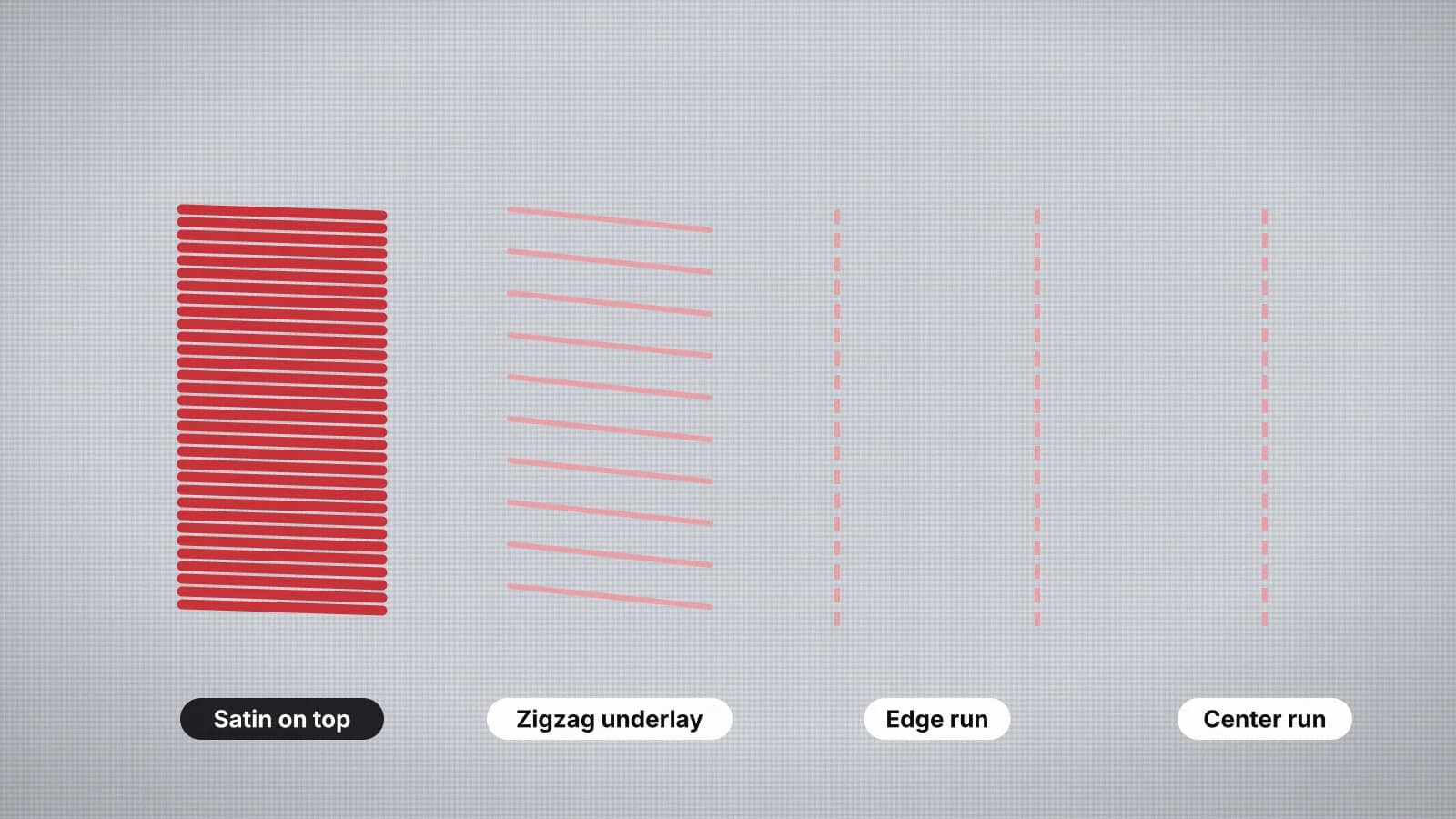 6 min readWhat is underlay in embroidery?What underlay does, the main types, underlay under satin and under fill, how much each fabric needs, Embrizo's four underlay levels, and the signs of too much or too little.Read the guide
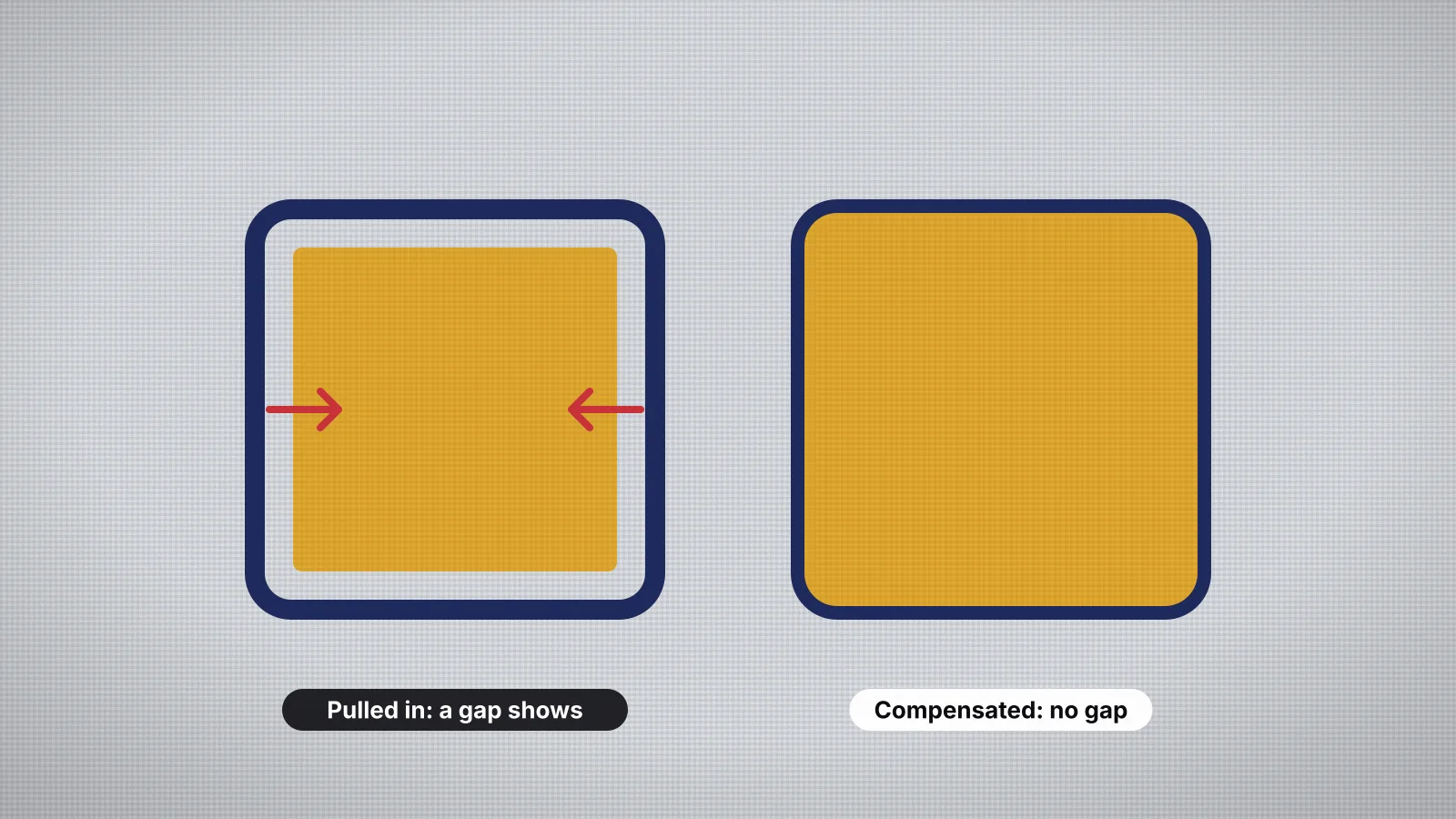 6 min readWhat is pull compensation in embroidery?Why stitches pull the fabric, what pull does to a design, how pull compensation works, typical amounts by fabric, how Embrizo applies it, and how to fix pull problems in the file and the hoop.Read the guide
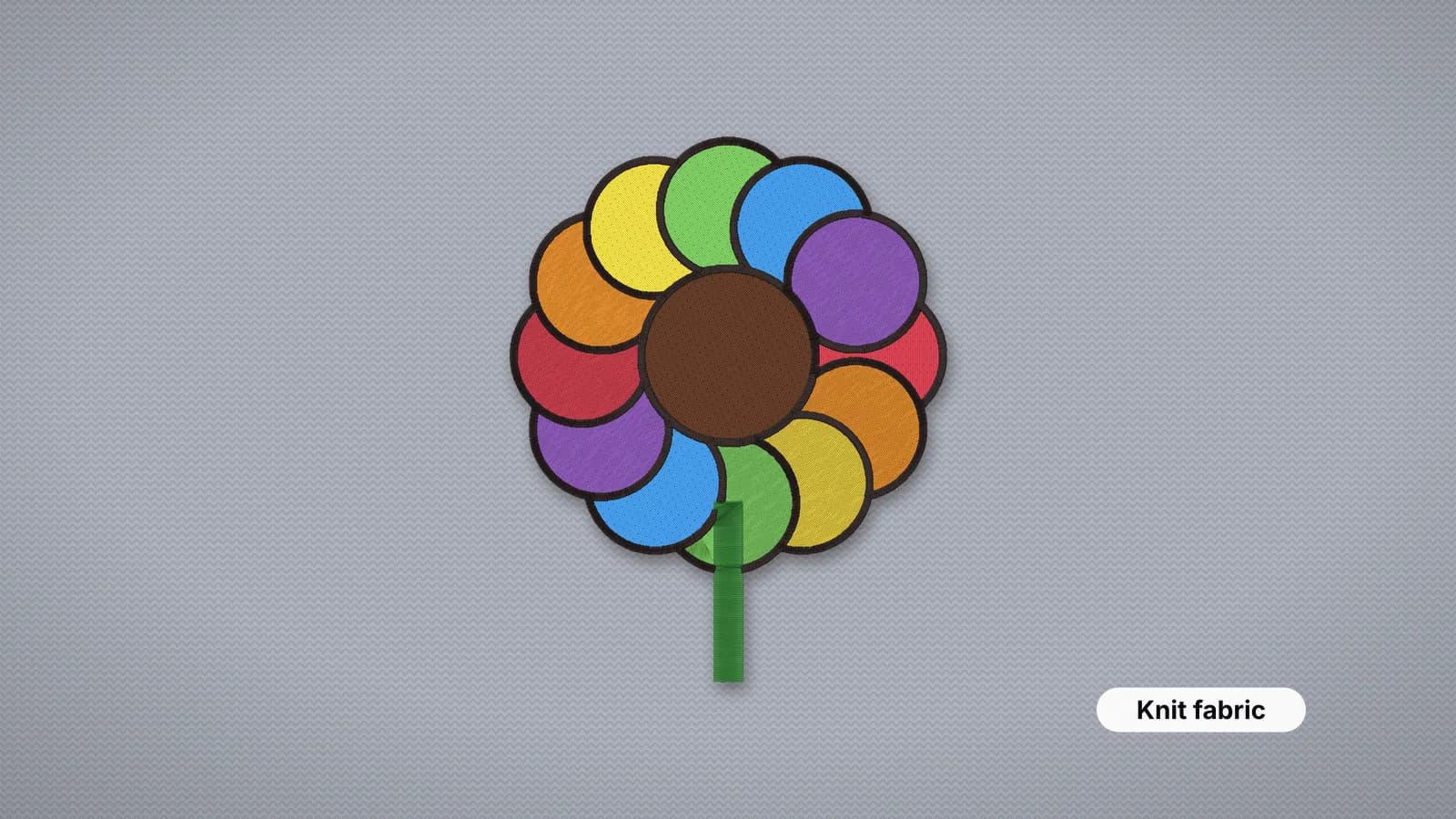 6 min readEmbroidery stabilizer guide: which backing for which fabricThe stabilizer types, which one each fabric needs and how to hoop for a flat, pucker-free result.Read the guide
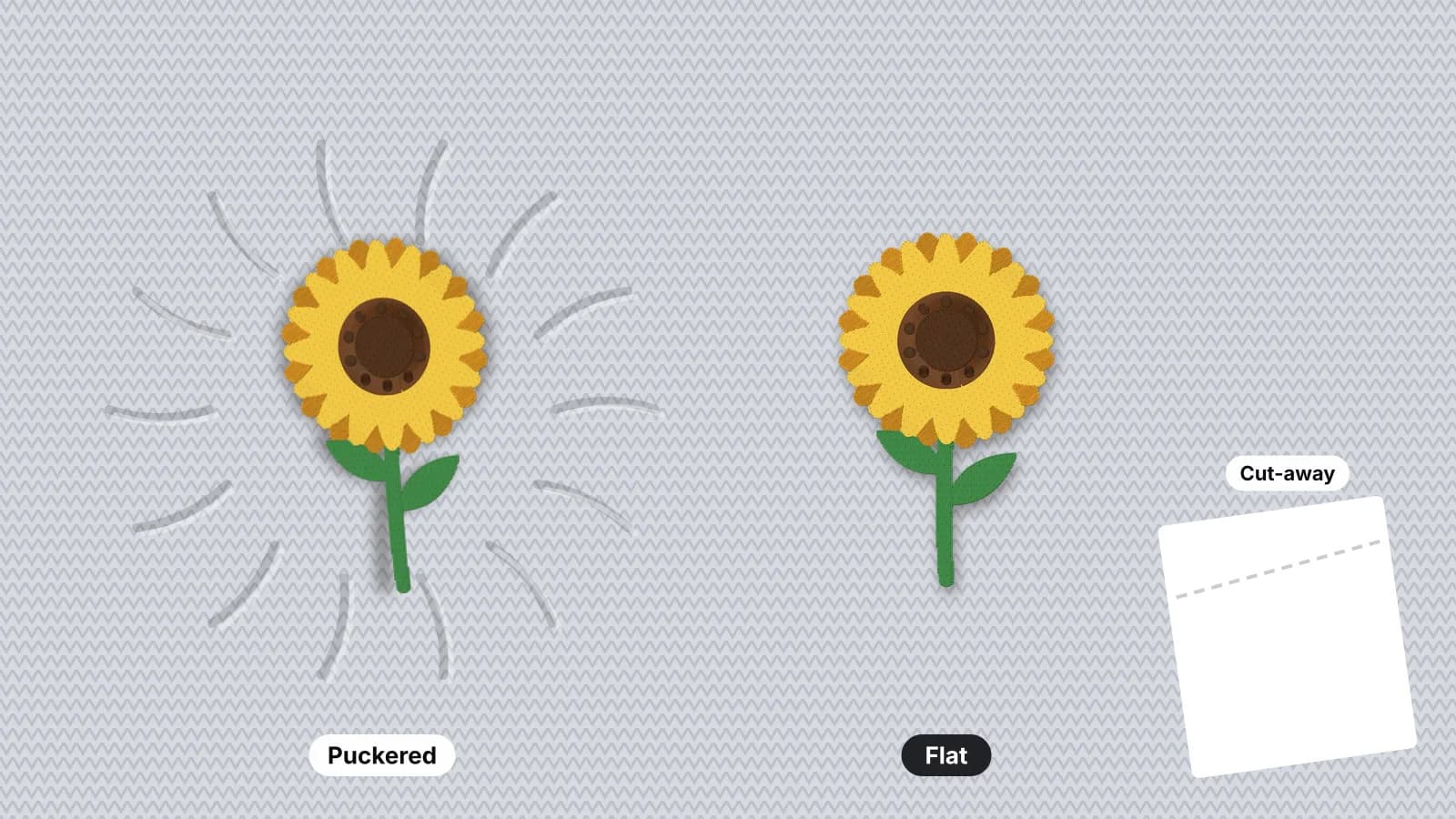 6 min readHow to fix embroidery puckeringA cause-and-fix table for puckering, then each fix in turn: stabilizer, hooping, density and pull compensation, the fabric and thread tension, plus how to rescue a puckered piece.Read the guide
Your design, ready to stitch
Sign up free, upload an image and see it stitched in under a minute. Your image stays on your device.